
Rwanda Tours & Safaris
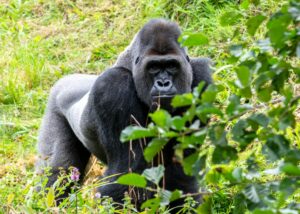
4-Day Volcanoes Gorilla Connection
From
US$ 1,350
PPS
Highlights
Rwanda's Gorilla Kingdom; One Unforgettable Journey
Destinations Visited
Why Rwanda Is Africa's Most Intimate and Inspiring Safari Destination
Rwanda is the ”Land of a Thousand Hills”—a country of extraordinary beauty and intimate wildlife encounters that defies its small size [citation:7]. It is a place where mist-cloaked volcanoes shelter endangered mountain gorillas, where ancient rainforests harbor chimpanzees and 13 primate species, and where savannah plains have been restored to support the Big Five [citation:5][citation:9].
But Rwanda is more than its wildlife. It is a country of profound transformation and hope, where conservation is woven into the fabric of society and communities welcome visitors with genuine warmth. From the serene shores of Lake Kivu to the vibrant capital of Kigali, Rwanda offers a safari experience that is as deeply moving as it is luxurious [citation:9]. Here is why Rwanda deserves a place on every Africa traveler’s bucket list.
Mountain Gorillas: The Encounter of a Lifetime
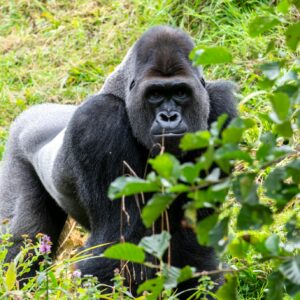
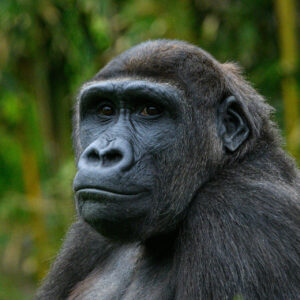
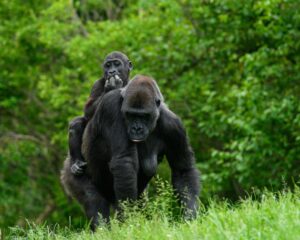
Rwanda is one of only three countries in the world where the critically endangered mountain gorillas live, and Parc National des Volcans is the stage for one of Africa’s most profound wildlife experiences [citation:5]. Experts estimate that there are only 780 mountain gorillas still in existence—and one third of these are in Rwanda [citation:7].
Tracking mountain gorillas through the misty bamboo forests of the Virunga Volcanoes is an experience that forever alters your perspective. You’ll hike through breathtaking terrain—ranging from 3,800 to 8,500 feet in altitude—guided by expert trackers who know individual gorillas by name [citation:5]. When you finally encounter a gorilla family, you’ll spend an unforgettable hour watching them feed, play, groom, and interact under the watchful eye of their silverback protector.
The experience is made even more meaningful by the legacy of Dian Fossey, who founded the Karisoke Research Center in 1967 and dedicated her life to gorilla conservation [citation:5]. Today, over 100 researchers continue her work, and visitors can tour a replica of Fossey’s cabin with original artifacts and a VR experience.
Volcanoes National Park: Beyond the Gorillas
Parc National des Volcans is a breathtaking blend of bamboo forests, cloud-shrouded peaks, and a chain of dormant volcanoes making up the Virunga massif [citation:5]. While gorilla trekking is the headline act, the park offers so much more.
Golden monkey trekking reveals another of Rwanda’s rare primates—energetic troops of golden monkeys that leap through the bamboo, their striking fur catching the light. Hiking trails traverse volcanic landscapes, from mountaineering feats like trekking to the top of 14,787-foot Mount Karisimbi to shorter hikes to sites like the Musanze caves, used by Rwandan Kings as places of refuge during the wars [citation:5].
The park is also home to over 200 bird species, making it a birding destination in its own right [citation:5]. The contrast of volcanic peaks, dense forest, and open montane meadows creates landscapes of extraordinary beauty.
Akagera National Park: The Big Five Return
In the east of Rwanda lies Akagera National Park, a landscape of rolling grasslands, acacia woodlands, and glittering lakes. Covering 1,122 square kilometres, it is Rwanda’s only savannah park and home to the Big Five—lions, leopards, elephants, rhinos, and buffalo [citation:1]. Akagera is one of Africa’s best conservation comeback stories. Once threatened by encroachment and poaching, it has been restored through a partnership between the Rwanda Development Board and African Parks [citation:1].
Lions reintroduced in 2015 now thrive here, with prides hunting across the savannah. Black and white rhinos, reintroduced in 2017 and 2021, are regularly seen [citation:5]. Large elephant herds move between grassland and wetland, offering dramatic sightings. Akagera’s lakes host some of Africa’s densest populations of hippos, alongside massive Nile crocodiles [citation:1].
With over 480 bird species recorded, including the prehistoric shoebill stork, Akagera is a paradise for birdwatchers [citation:1]. Game drives reveal classic East African wildlife, while boat trips on Lake Ihema offer close encounters with hippos, crocodiles, and waterbirds [citation:5].
Nyungwe Forest: Ancient Rainforest Alive with Primates
In Rwanda’s southwest, Nyungwe Forest National Park tells a very different story. This 1,019 square kilometre rainforest is one of the oldest and most biodiverse in Africa, sheltering a vast array of primates, birds, and plants [citation:1]. It is one of the world’s oldest rainforests, giving it incredible biodiversity that includes over 1,000 plant species [citation:5].
Chimpanzee trekking takes guests deep into the forest to watch troops forage, play, and communicate. The experience is thrilling, fast-paced, and unforgettable [citation:1]. Nyungwe also hosts one of the largest troops of colobus monkeys in Africa, sometimes numbering over 400 individuals [citation:1]. In total, 13 primate species call this forest home, including L’Hoest’s monkey and grey-cheeked mangabey [citation:5].
The canopy walk, a suspended walkway 70 metres above the forest floor, offers a bird’s-eye view of the canopy [citation:1]. Over 130 kilometres of hiking trails wind through waterfalls, ridges, and hidden valleys [citation:5]. With over 300 bird species, including 29 Albertine Rift endemics like the Rwenzori turaco, the forest is a birder’s dream [citation:1].
Lake Kivu: Serene Shores & Island Escapes
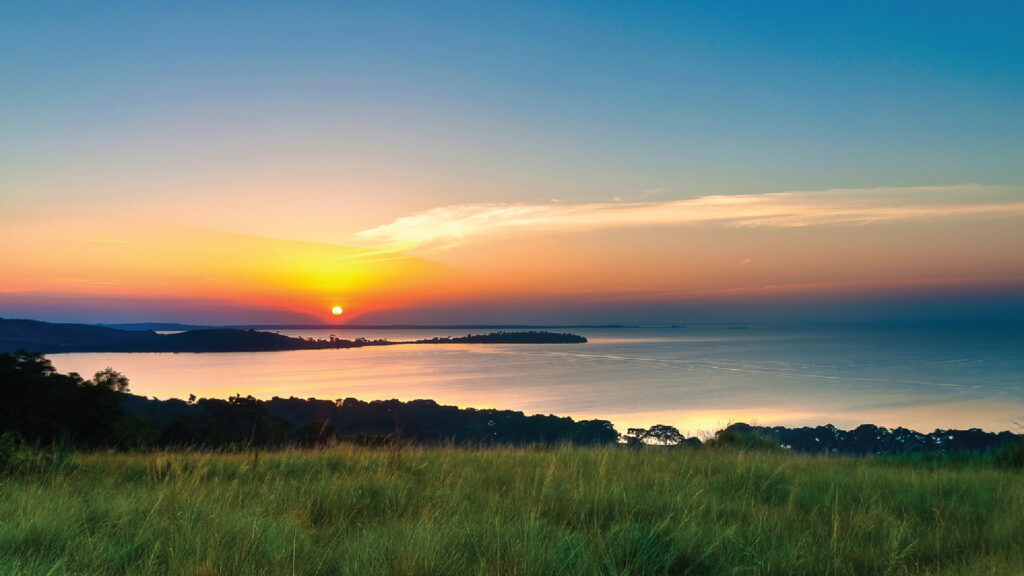
Lake Kivu is a serene counterpoint to Rwanda’s wild interior. This vast freshwater lake, one of Africa’s Great Lakes, stretches along the border with the Democratic Republic of Congo, its cobalt waters reflecting the terraced hills that surround it [citation:9].
The lake’s shoreline towns—Gisenyi, Kibuye, and Cyangugu—offer peaceful retreats with beautiful beaches, lakeside lodges, and opportunities for kayaking, swimming, and boat trips to forested islands. The Congo Nile Trail, a 227-kilometer route along the lake’s edge, is perfect for hiking, biking, or driving, with breathtaking panoramas at nearly every turn [citation:7].
Lake Kivu is the ideal place to unwind after gorilla trekking, offering a tranquil counterpoint to the intensity of wildlife encounters. The sunsets over the lake, with fishing boats silhouetted against the orange sky, are pure magic.
Kigali: Africa's Most Vibrant Capital
Kigali, Rwanda’s bustling capital, is often the first and last stop on any Rwandan journey. It’s a city that defies expectations—clean, green, and remarkably safe, with a vibrancy that reflects Rwanda’s optimistic spirit [citation:7].
The Kigali Genocide Memorial is an essential visit—a deeply moving tribute to the victims of the 1994 genocide against the Tutsi. It offers a profound understanding of Rwanda’s history and its remarkable journey of reconciliation and renewal.
Beyond the memorial, Kigali offers excellent restaurants, craft markets, and a thriving arts scene. The city’s hills are dotted with luxury hotels and boutique lodges that make perfect bases for beginning or ending your Rwandan adventure [citation:1]. Every last Sunday of the month, you can participate in Umuganda, a city-wide community service that embodies Rwanda’s spirit of collective responsibility [citation:7].
Exploring Rwanda: From Volcanoes to Savannah to Ancient Rainforest
Volcanoes National Park: Gorilla Heartland
Volcanoes National Park is Rwanda’s crown jewel, where mist-cloaked peaks shelter endangered mountain gorillas [citation:9]. This breathtaking park spans 160 square kilometers of bamboo forests, cloud-shrouded peaks, and a chain of dormant volcanoes making up the Virunga massif [citation:5].
Gorilla trekking is the main draw—a life-changing experience that takes you through montane forest to spend an unforgettable hour with a habituated gorilla family. Twelve gorilla groups are habituated for tourism, with permits strictly limited to 8 visitors per group per day [citation:5].
Beyond gorillas, the park offers golden monkey trekking, hiking to Mount Karisimbi (Rwanda’s highest peak at 14,787 feet), and visits to the Musanze caves, used by Rwandan Kings as places of refuge [citation:5]. The Dian Fossey trail leads to the site of her research camp and grave, offering insight into the life of the legendary primatologist [citation:5].
Akagera National Park: Big Five Savannah
Akagera National Park, in eastern Rwanda, is the country’s only savannah park—a stunning 1,122-square-kilometer landscape of rolling grasslands, acacia woodlands, and glittering lakes [citation:1]. It is one of Africa’s most inspiring conservation success stories, transformed from a threatened ecosystem into a thriving wilderness that now hosts the Big Five [citation:1].
The park is divided into distinct areas. The northern sector is classic savannah, excellent for game drives featuring elephants, buffalo, zebras, giraffes, and the reintroduced lions and rhinos. The southern sector encompasses Lake Ihema and other lakes, where boat safaris reveal hippos, crocodiles, and spectacular waterbirds including the prehistoric shoebill stork [citation:5].
Over 480 bird species have been recorded, making Akagera a premier birding destination [citation:1]. The park’s network of well-maintained roads allows for self-drive safaris or guided tours, with picnic sites and viewpoints scattered throughout.
Nyungwe Forest National Park: Primate Paradise
Nyungwe Forest National Park, in Rwanda’s southwest, is one of Africa’s oldest and most biodiverse rainforests [citation:5]. This 1,019-square-kilometer ancient forest shelters an astonishing array of life, including 13 primate species—the highest concentration in the Albertine Rift [citation:1].
Chimpanzee trekking is the park’s premier activity. Unlike gorilla trekking, which is relatively sedate, tracking chimps is a fast-paced adventure through dense forest as you follow the calls and movements of these energetic primates [citation:1].
The park also hosts one of Africa’s largest troops of colobus monkeys, sometimes numbering over 400 individuals [citation:1]. The canopy walk, a suspended bridge 70 meters above the forest floor, offers breathtaking views and perspectives usually reserved for birds [citation:5]. Over 130 kilometers of hiking trails wind through waterfalls, ridges, and hidden valleys, with stunning views across the forest [citation:5].
Lake Kivu: Rwanda's Coastal Escape
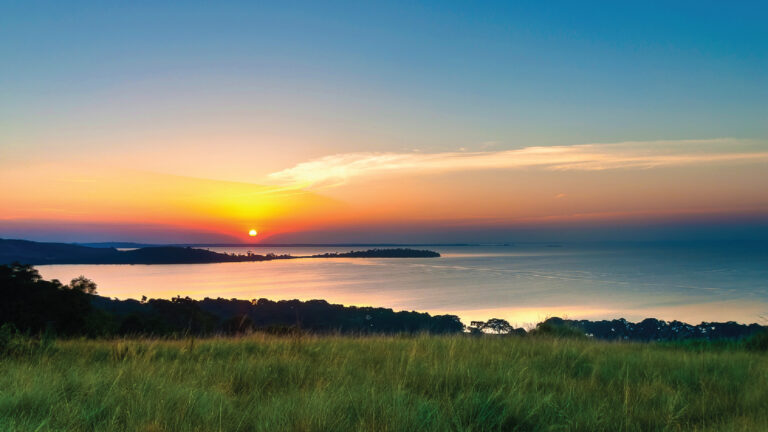
Lake Kivu is a serene counterpoint to Rwanda’s wild interior. One of Africa’s Great Lakes, it stretches along the border with the Democratic Republic of Congo, its cobalt waters reflecting the terraced hills that surround it [citation:9].
The lake’s shoreline is dotted with beautiful towns. Gisenyi, in the north, offers lovely beaches, lakeside resorts, and a relaxed atmosphere perfect for swimming and watersports. Kibuye, in the center, is more tranquil, with forested islands and excellent kayaking opportunities. Cyangugu, in the south, provides access to Nyungwe Forest and offers stunning views across the lake.
The Congo Nile Trail, a 227-kilometer route along the lake’s edge, is perfect for hiking, mountain biking, or scenic drives [citation:7]. For those seeking relaxation, Lake Kivu is the ideal place to unwind after gorilla trekking—swimming, kayaking, or simply watching the sunset over the water.
Kigali: The Gateway City
Kigali, Rwanda’s bustling capital, is often the first and last stop on any Rwandan journey. It’s a city that defies expectations—clean, green, and remarkably safe, with a vibrancy that reflects Rwanda’s optimistic spirit [citation:7]. Located just 20 minutes from the airport, luxury hotels like Hemingways Retreat Kigali provide the perfect base for beginning or ending your safari [citation:1].
The Kigali Genocide Memorial is an essential visit—a deeply moving tribute to the victims of the 1994 genocide against the Tutsi. It offers a profound understanding of Rwanda’s history and its remarkable journey of reconciliation and renewal.
Beyond the memorial, Kigali offers excellent restaurants, craft markets, and a thriving arts scene. The Kimironko Market is a sensory explosion of fresh produce, spices, and crafts. Every last Sunday of the month, visitors can participate in Umuganda, a city-wide community service that embodies Rwanda’s spirit of collective responsibility [citation:7].
Musanze: The Volcanoes Gateway
Musanze (formerly Ruhengeri) is the gateway town to Volcanoes National Park, nestled in the shadow of the Virunga volcanoes. This bustling town is where most gorilla treks begin, offering a range of accommodations from luxury lodges to budget guesthouses.
The town itself is worth exploring. The Musanze market is vibrant and colorful, offering local crafts, fresh produce, and a glimpse into daily Rwandan life. The Musanze caves, formed by ancient lava flows, extend for over two kilometers and offer fascinating guided tours [citation:5].
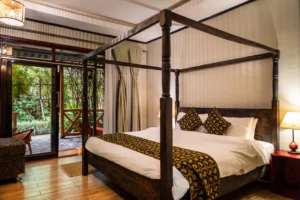
Several excellent lodges are located just outside town, including the famous Bisate Lodge and Sabyinyo Silverback Lodge, offering stunning views of the volcanoes and luxurious accommodations that perfectly complement the gorilla trekking experience [citation:9].
Rwanda Month-by-Month: Gorilla Trekking, Chimpanzees & When to Go
Rwanda is the ”Land of a Thousand Hills”—a country of extraordinary beauty and intimate wildlife encounters [citation:7]. Despite its small size, Rwanda offers three distinct safari experiences: tracking mountain gorillas through the misty volcanoes of Parc National des Volcans, chimpanzee trekking in the ancient rainforest of Nyungwe, and Big Five game viewing in the savannah plains of Akagera [citation:5][citation:9].
The country experiences two dry seasons (June-September and December-February) which offer the best conditions for gorilla and chimpanzee trekking, with drier trails and clearer views [citation:5]. The wet seasons (March-May and October-November) bring lush green landscapes, spectacular birding with over 500 species across the parks, and far fewer visitors at most destinations [citation:1].
All temperatures are daytime highs and nighttime lows. Highland areas (Volcanoes National Park) are significantly cooler, especially at night.
Month
Rain
Min
Max
Season
JAN
65 mm
15
27°C
Short Dry
Short dry season. Excellent trekking nationwide. January is one of Rwanda’s best months for travel. The short dry season offers excellent conditions for gorilla trekking in Volcanoes National Park, with drier trails and clearer mountain views [citation:5]. Chimpanzee trekking in Nyungwe Forest is also good, though some afternoon showers may occur.
Akagera National Park offers excellent game viewing as animals concentrate around water sources. The weather is warm and pleasant across the country. This is peak season for gorilla trekking—permits ($1,500) should be booked months in advance [citation:9]. Lake Kivu is beautiful for lakeside relaxation.
⭐ Highlights: Peak gorilla trekking, excellent game viewing in Akagera, pleasant weather, peak season.
Gorilla trek
FEB
70 mm
15
27°C
Short Dry
Short dry season continues. February offers conditions similar to January—dry, sunny, and excellent for all safari activities across Rwanda [citation:5]. Gorilla permits remain in high demand. This is the final month of the short dry season before the long rains begin.
Game viewing in Akagera is excellent, with wildlife concentrated around lakes and waterholes. Nyungwe’s canopy walk offers clear views of the rainforest. Volcanoes National Park’s trails are in optimal condition. A wonderful time for photographers seeking clear light and defined shadows.
⭐ Highlights: Final dry month, excellent trekking, clear volcano views, peak season.
Crater lakes
MAR
120 mm
15
26°C
Long Rains
Long rains begin. Green season arrives. March marks the start of the long rains across Rwanda. Afternoon showers become frequent, transforming the landscape into lush green. Gorilla trekking becomes more challenging—trails get slippery, but the forest is at its most beautiful [citation:5].
This is shoulder season—crowds thin, rates drop. Birding improves dramatically with over 500 species active across the parks [citation:1]. Akagera’s landscapes are stunningly green. The canopy walk in Nyungwe offers misty, atmospheric views. A wonderful time for photographers and birders who don’t mind some rain.
⭐ Highlights: Lush landscapes, spectacular birding, shoulder season rates, fewer crowds.
Rwenzori peaks
APR
150 mm
15
25°C
Long Rains
Peak of the long rains. Lush and beautiful. April is Rwanda’s wettest month. Heavy afternoon storms are common across the country. Gorilla trekking is challenging but still possible for determined trekkers—trails are muddy, and gorillas may be harder to find [citation:5].
The landscape is spectacularly green. Waterfalls cascade down the Virunga volcanoes. Birding is exceptional, with over 480 species in Akagera alone [citation:1]. This is low season—rates are at their lowest, and gorilla permits may be available when they’re sold out in peak months [citation:9]. For adventurous travelers who don’t mind rain, April offers solitude and breathtaking green scenery.
⭐ Highlights: Emerald landscapes, lowest rates, solitude, exceptional birding.
Margherita Peak
MAY
130 mm
15
25°C
Long Rains
Long rains continue. Green peak. May sees continued rainfall, though it begins to taper toward month’s end. The landscape remains lush and green. Gorilla trekking is still challenging but improving [citation:5]. This is still low season—rates are excellent, crowds are minimal.
Birding remains spectacular across all three national parks. Nyungwe’s rainforest is at its most vibrant. Akagera’s lakes are full and beautiful. For travelers who value solitude and don’t mind some rain, May offers rewards and improving conditions toward month’s end.
⭐ Highlights: Green landscapes, improving trekking, low season rates, excellent birding.
Chimpanzee 001
JUN
25 mm
14
26°C
Peak Dry
Dry season begins. Prime time returns. June marks the start of the main dry season—the best time for gorilla and chimpanzee trekking in Rwanda [citation:5]. Trails begin to dry, and trekking conditions improve rapidly. Gorilla permits become more sought after.
Game viewing in Akagera improves as animals concentrate around water sources. The weather is perfect—warm days, cool nights at higher elevations. This is the start of peak season—book gorilla permits and accommodations in advance. Lake Kivu offers beautiful conditions for lakeside relaxation.
⭐ Highlights: Dry season begins, excellent trekking, game viewing improves, peak season starts.
Bwindi Forest
JUL
15 mm
14
26°C
Peak Dry
Peak dry season. Excellent conditions. July offers some of Rwanda’s best safari conditions across the country [citation:5]. Gorilla trekking in Volcanoes National Park is at its finest—trails are dry, and gorillas are easier to track. Chimpanzee trekking in Nyungwe is excellent.
Game viewing in Akagera is exceptional, with animals concentrated around water sources. The weather is perfect—warm, sunny days, cool nights at higher elevations. This is peak season—book gorilla permits and accommodations months in advance [citation:9]. The canopy walk in Nyungwe offers spectacular views.
⭐ Highlights: Peak trekking, excellent game viewing, perfect weather, peak season.
Murchison Falls
AUG
20 mm
14
26°C
Peak Dry
Peak dry season continues. August offers conditions similar to July—excellent for all safari activities across Rwanda [citation:5]. Gorilla permits remain in high demand. Game viewing in Akagera is exceptional, with wildlife concentrated around lakes and water sources.
The weather remains perfect—warm, sunny days, cool nights at higher elevations. This is still peak season, with corresponding crowds and rates. Lake Kivu is beautiful for swimming, kayaking, and lakeside relaxation. A wonderful time for photography.
⭐ Highlights: Exceptional trekking, game viewing, perfect weather, peak season.
Queen Elizabeth
SEP
30 mm
14
26°C
Late Dry
Late dry season. Excellent conditions continue. September offers conditions similar to July and August, with marginally fewer visitors. Gorilla trekking remains excellent, with dry trails and clear mountain views [citation:5]. Chimpanzee trekking in Nyungwe is still good.
This is considered one of the best months to visit Rwanda, combining excellent safari conditions with slightly fewer crowds. The weather remains perfect—warm, sunny days, cool nights at higher elevations. Birding is good with resident species active. A wonderful time for photographers.
⭐ Highlights: Excellent trekking, fewer crowds, perfect weather, great photography.
Mount Elgon
OCT
60 mm
15
26°C
Short Rains
Short rains begin. Transition month. October marks the start of the short rains. Afternoon showers become more frequent, though they’re less intense than the long rains. Gorilla trekking is still excellent early in the month [citation:5].
This is shoulder season—crowds thin, rates soften, but conditions remain favorable. Birding improves with the return of moisture. The landscapes begin to green beautifully. A good time for value-conscious travelers seeking quality trekking with fewer people.
⭐ Highlights: Transition month, shoulder rates, good trekking, green landscapes.
Jinja lodge
NOV
110 mm
15
26°C
Short Rains
Short rains continue. Second wet peak. November brings increased rainfall, though still less intense than the long rains [citation:5]. Gorilla trekking is still possible, though trails can be muddy. This is low season—rates drop, crowds are minimal.
Birding is exceptional, with migratory birds arriving. Nyungwe’s rainforest is lush and atmospheric. Akagera’s landscapes are beautifully green. For travelers who don’t mind some rain, November offers solitude and a different perspective on Rwanda’s beauty.
⭐ Highlights: Green landscapes, low season rates, excellent birding, solitude.
Sesse Islands
DEC
70 mm
15
27°C
Dry Return
Short dry season returns. Holiday season. December marks the return of the short dry season—another excellent time for gorilla trekking [citation:5]. The rains taper early in the month. By mid-December, conditions are dry and excellent across the country.
This is peak season for the Christmas holidays—book gorilla permits and accommodations months in advance [citation:9]. The weather is warm and pleasant. A wonderful time for a festive safari, with celebrations at lodges across Rwanda’s stunning landscapes.
⭐ Highlights: Dry season returns, holiday atmosphere, excellent trekking, festive season.
Kidepo landscape
Plan Your Journey to Rwanda
Ready to explore? Our travel specialists are here to help craft your dream itinerary.
Chat on WhatsApp