Amboseli National Park

Amboseli National Park

  • Best Time to Visit: June to October and January to February for clear skies and concentrated wildlife around water sources.
  • Entry Fees: Non-residents: USD 60 adults / USD 35 children; Residents: KES 800 adults / KES 400 children.
  • Country: Southern Kenya

Why Amboseli Is Africa's Most Iconic Elephant Destination

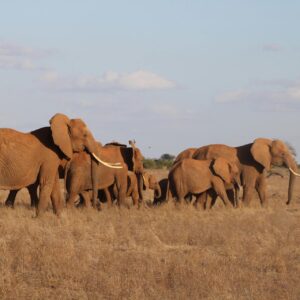
Amboseli National Park is the stuff of African dreams. Beneath the towering snow-capped peak of Mount Kilimanjaro—the highest mountain in Africa—vast herds of elephants move across open plains, their dusty red skin contrasting against the emerald green of permanent swamps. This is the Africa of postcards, of films, of childhood imaginings.

But Amboseli is more than just a pretty view. It is one of the best places in Africa to see elephants—not just in passing, but to observe their complex social structures, their family dynamics, their daily lives. It is a park of dramatic contrasts: arid lake beds and lush wetlands, open savannah and acacia woodland, all framed by the most famous mountain on the continent.

Here is why Amboseli deserves a place on every safari traveler’s bucket list.

The Elephants of Amboseli: The Most Studied Herds on Earth
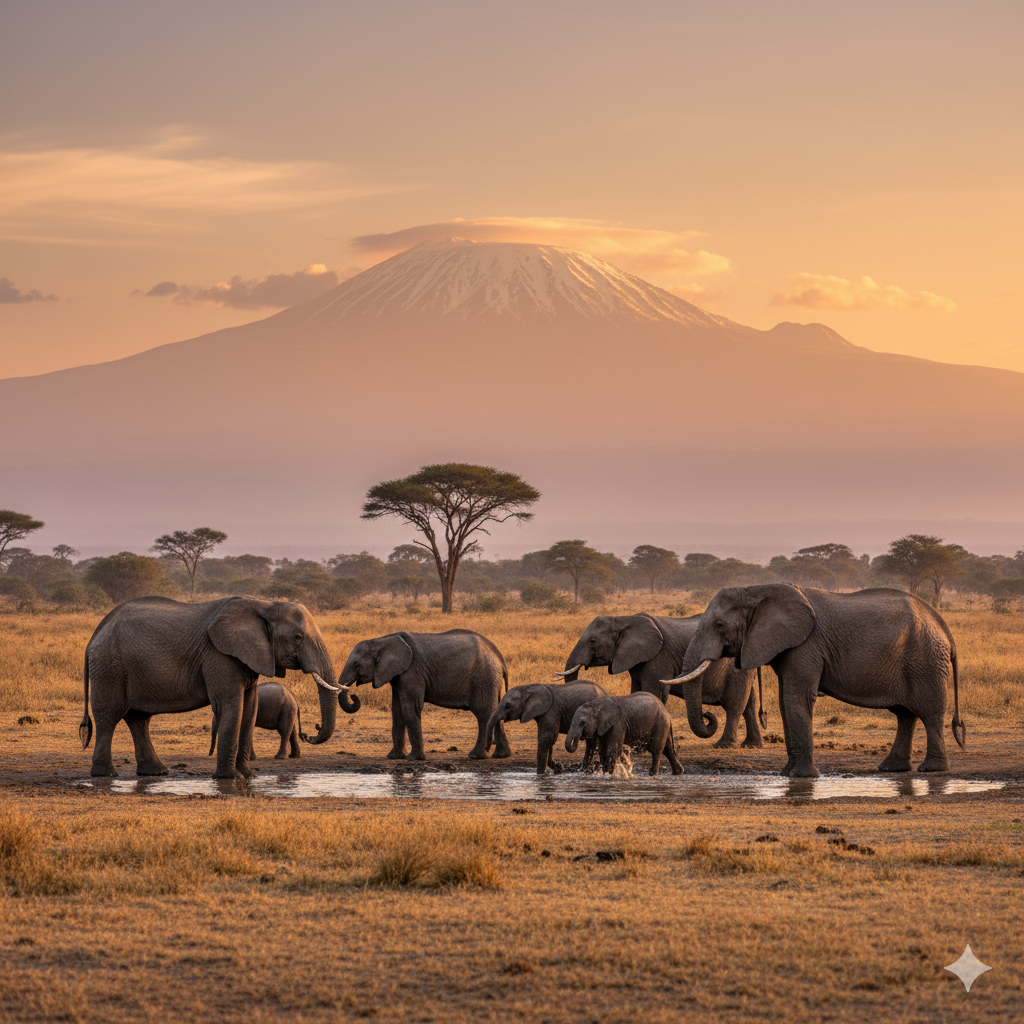
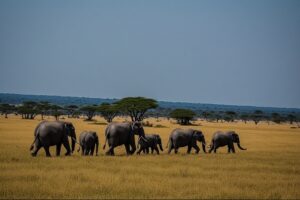
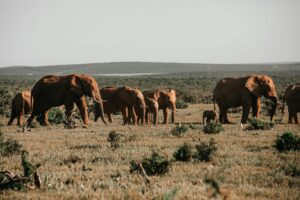
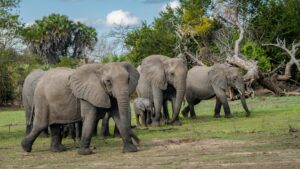
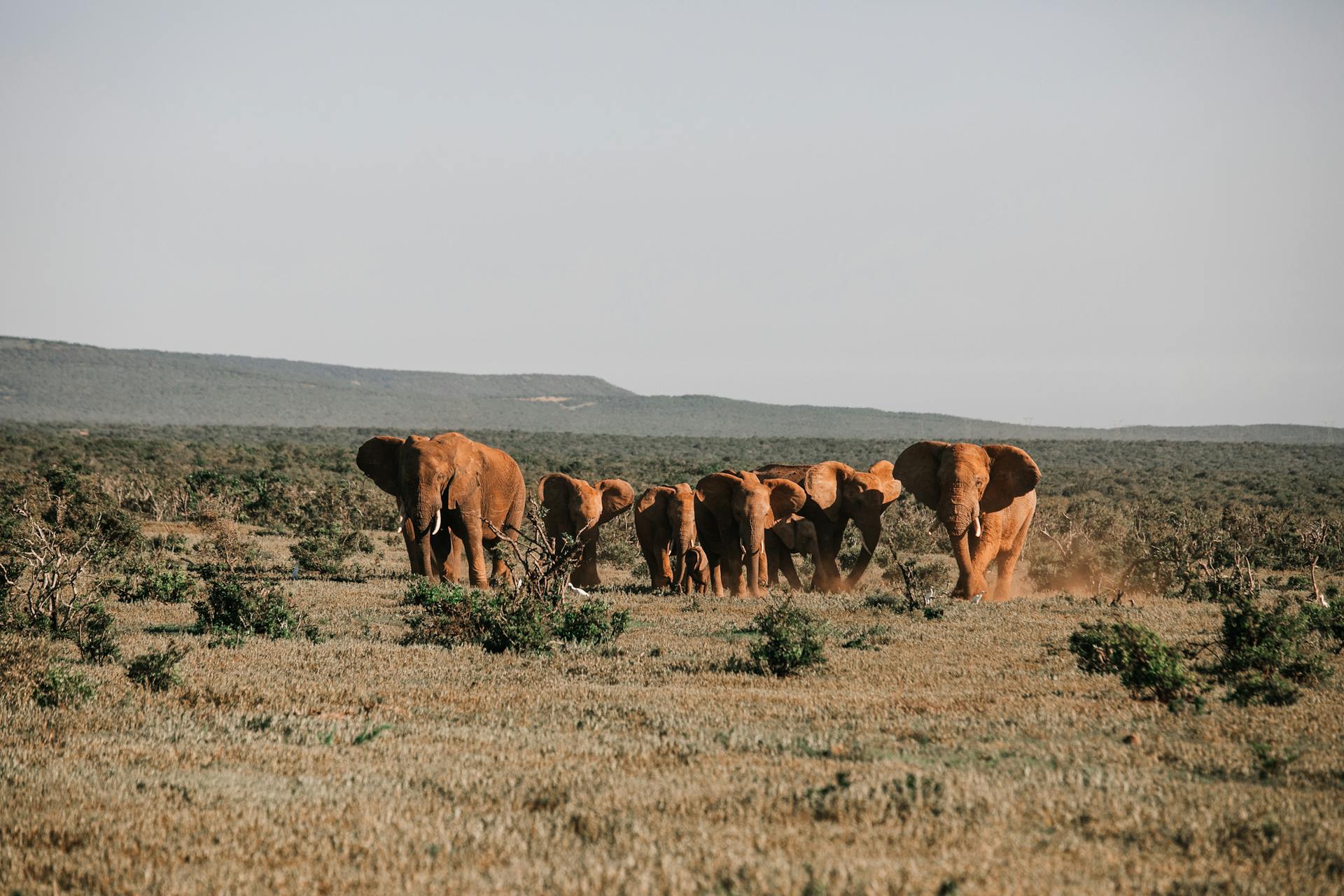
Elephant herd with Kilimanjaro

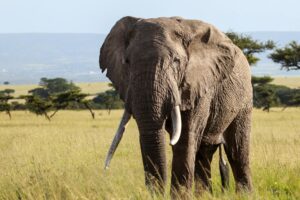
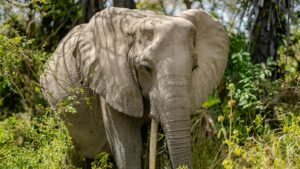
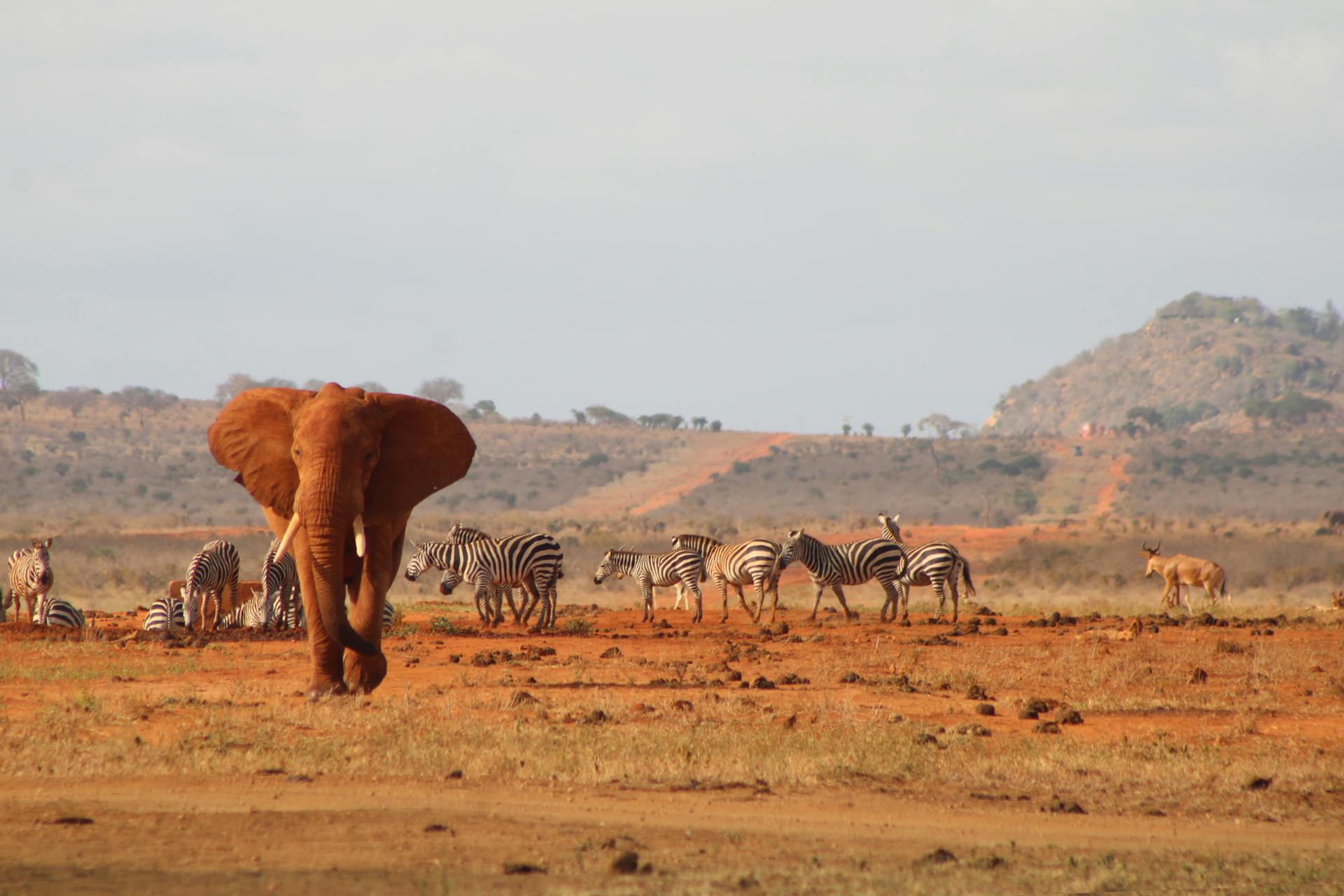
Amboseli is home to over 1,500 elephants—some of the most studied and best-understood elephant populations in the world. The Amboseli Elephant Research Project, founded by Cynthia Moss in 1972, has continuously monitored these elephants for more than five decades. They know individual animals by name, track family lineages across generations, and have documented behaviors that have transformed our understanding of elephant society.

What this means for you: the elephants of Amboseli are remarkably habituated to vehicles. They go about their daily lives—feeding, bathing, socializing, raising young—as if you weren’t there. You can watch a matriarch lead her family to water, observe a calf learning to use its trunk, witness the tender bonds between mothers and daughters.

No other place on earth offers this combination of wild elephants and intimate observation. Amboseli’s elephants are not just animals—they are individuals with personalities, histories, and stories.

Mount Kilimanjaro: The Greatest Backdrop on Earth
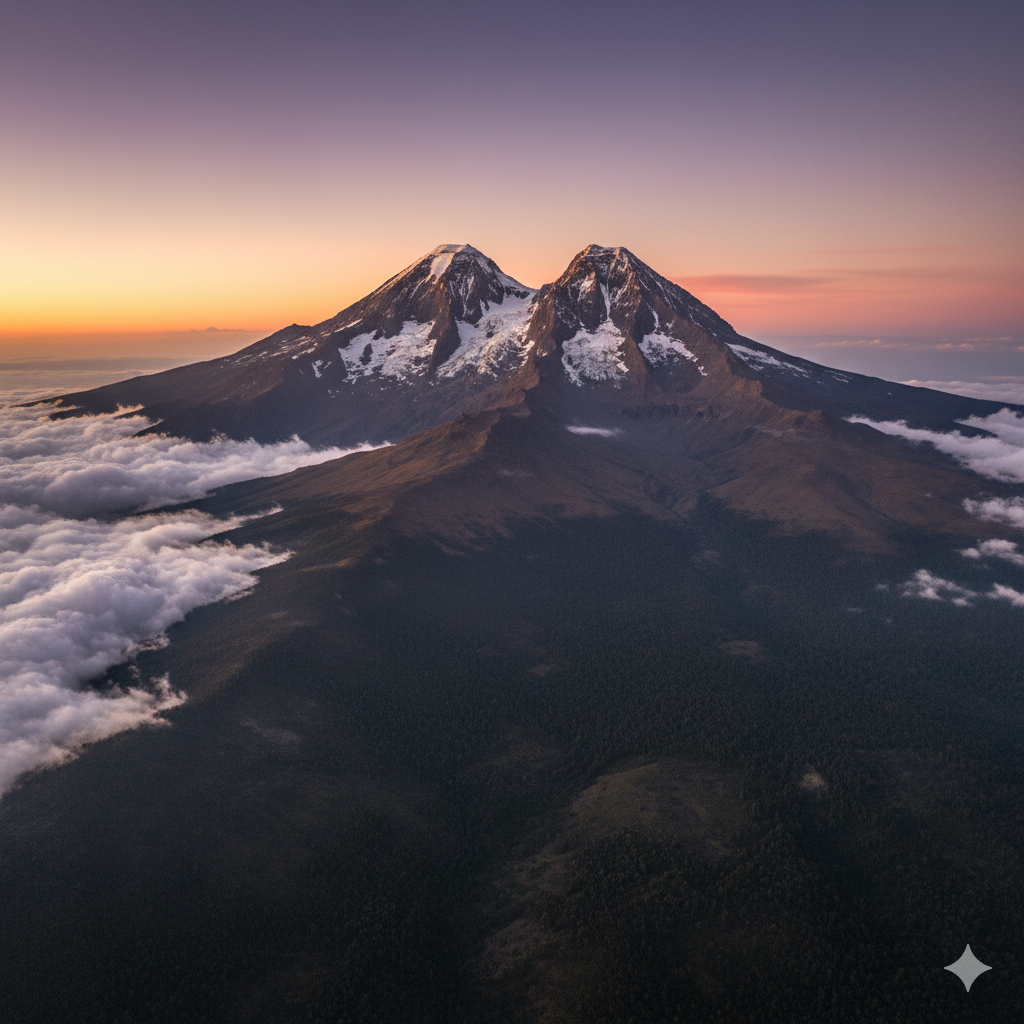
Kilimanjaro at sunset

Mount Kilimanjaro is not in Kenya—it rises across the border in Tanzania. But Amboseli has the best views of Africa’s highest mountain. On clear mornings, the snow-capped peak floats above the plains, seemingly close enough to touch, its glaciers catching the first light of dawn.

The mountain’s presence transforms everything. Elephants photographed with Kilimanjaro behind them have become icons of African wildlife. The play of light on the peak through the seasons—sometimes sharp and clear, sometimes soft with cloud—creates photographic opportunities that draw professionals from around the world.

The best views are in the dry season (June to October and January to February), when morning skies are clearest. Observation Hill, the park’s highest point, offers panoramic views of the mountain, the swamps, and the plains below.

The Swamps: Lifeblood of Amboseli
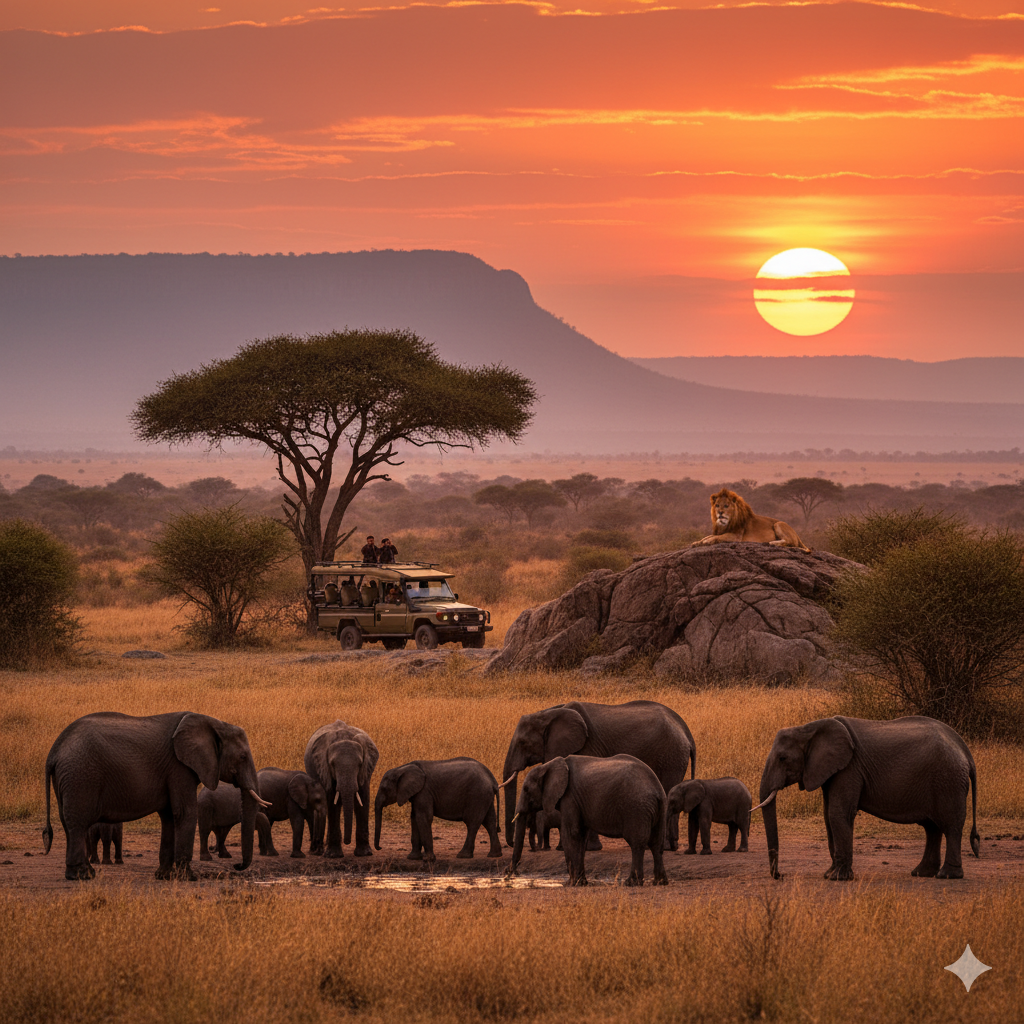
Elephants in swamp with mountain

In a landscape of semi-arid plains, the permanent swamps of Amboseli are oases of life. Fed by underground rivers from Kilimanjaro’s melting snow, these wetlands—Enkongo Narok, Longinye, and others—provide year-round water that sustains the park’s incredible wildlife concentrations.

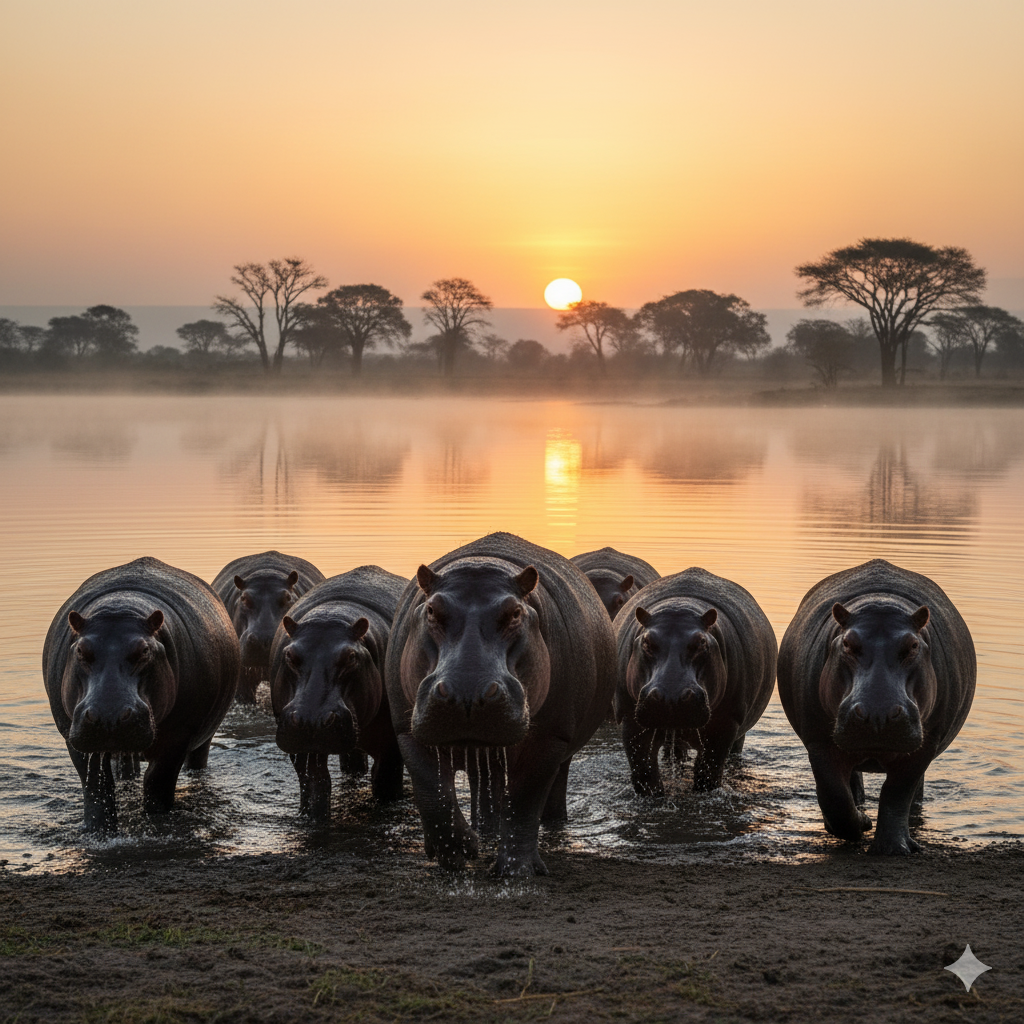
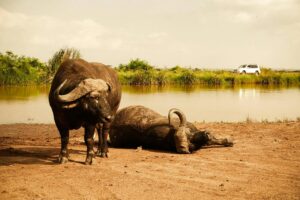
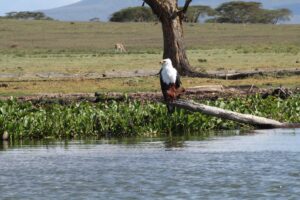
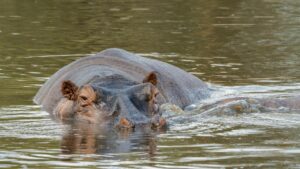
Here you’ll find elephants up to their shoulders in water, spraying themselves with mud. Hippos wallow in the deeper pools. Buffalo graze the lush edges. And the birdlife is extraordinary—herons, egrets, kingfishers, and the spectacular African fish eagle.

The swamps are also where you’ll find some of Amboseli’s most photographed scenes: elephants emerging from the water, their skin glistening, with Kilimanjaro rising behind them. It’s a combination of elements that defines this park.

Beyond Elephants: Amboseli's Other Wildlife
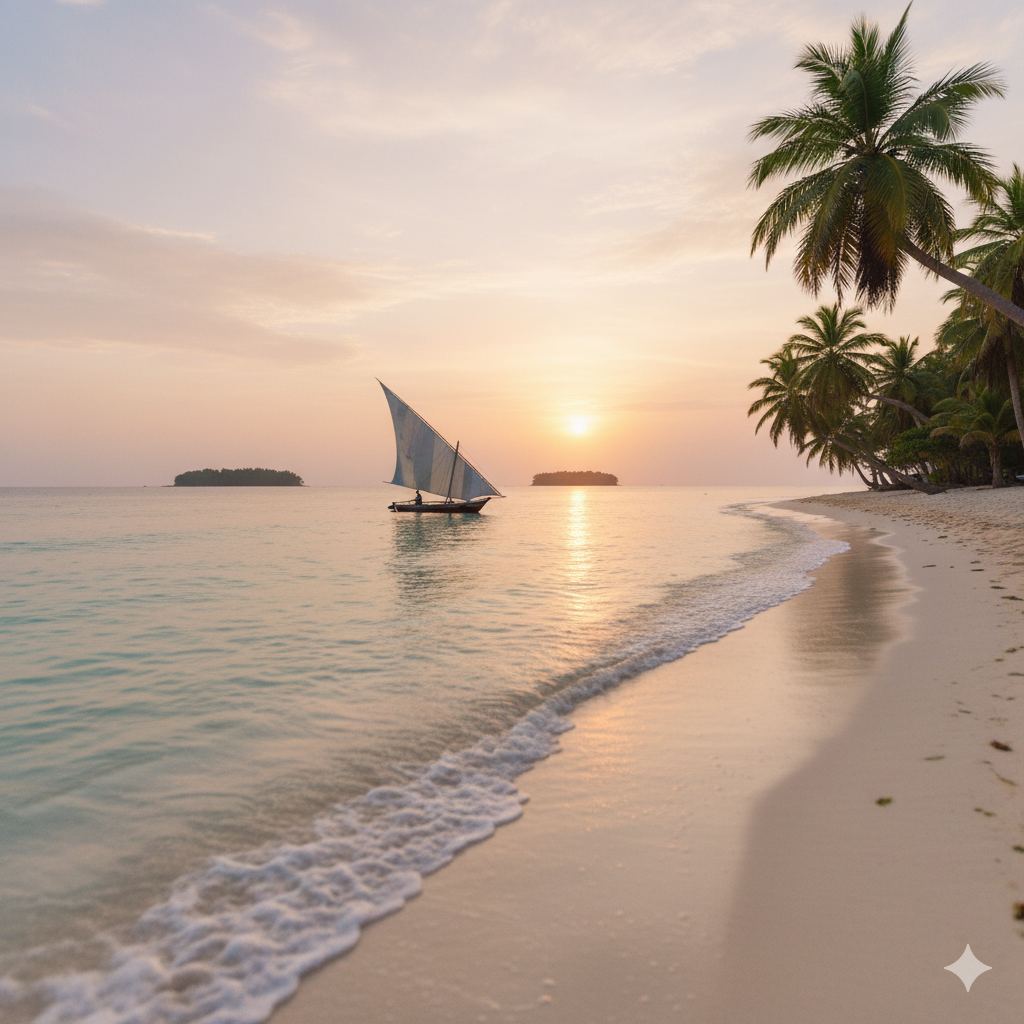
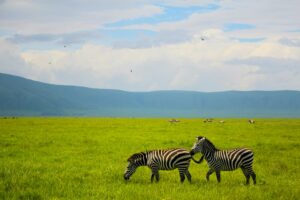
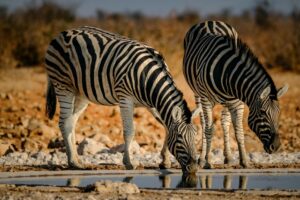
Zebra on Amboseli plains

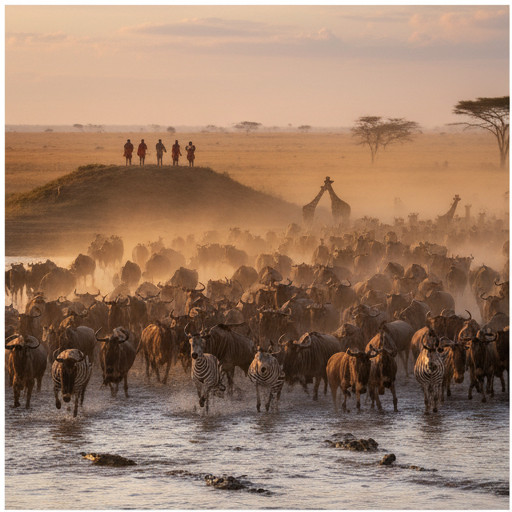
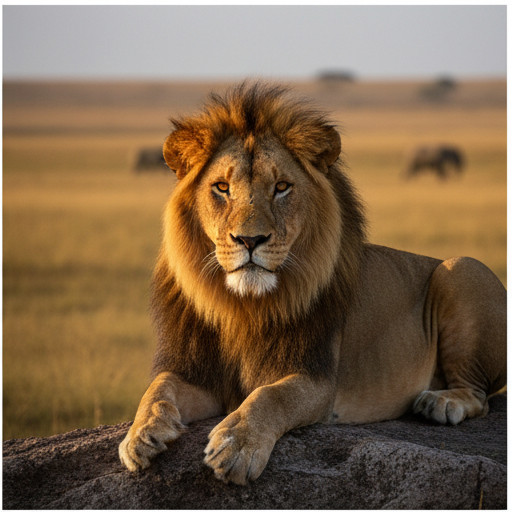
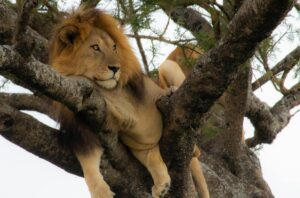
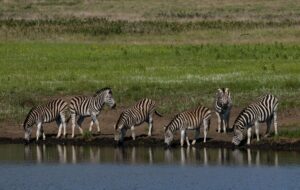
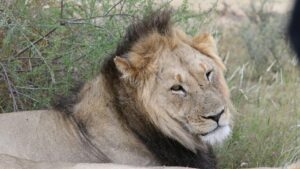
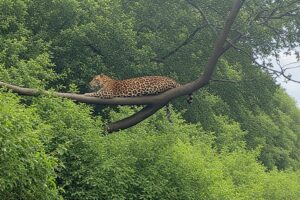
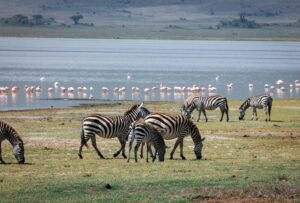
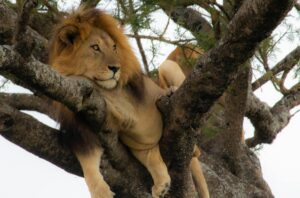
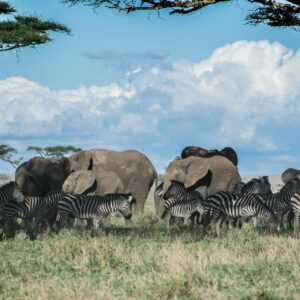
While elephants are the stars, Amboseli supports an impressive array of other wildlife. Buffalo herds number in the hundreds. Zebra and wildebeest migrate across the plains. Giraffe browse the acacia woodlands. And the park’s predators—lion, leopard, cheetah, hyena—thrive on the abundant prey.

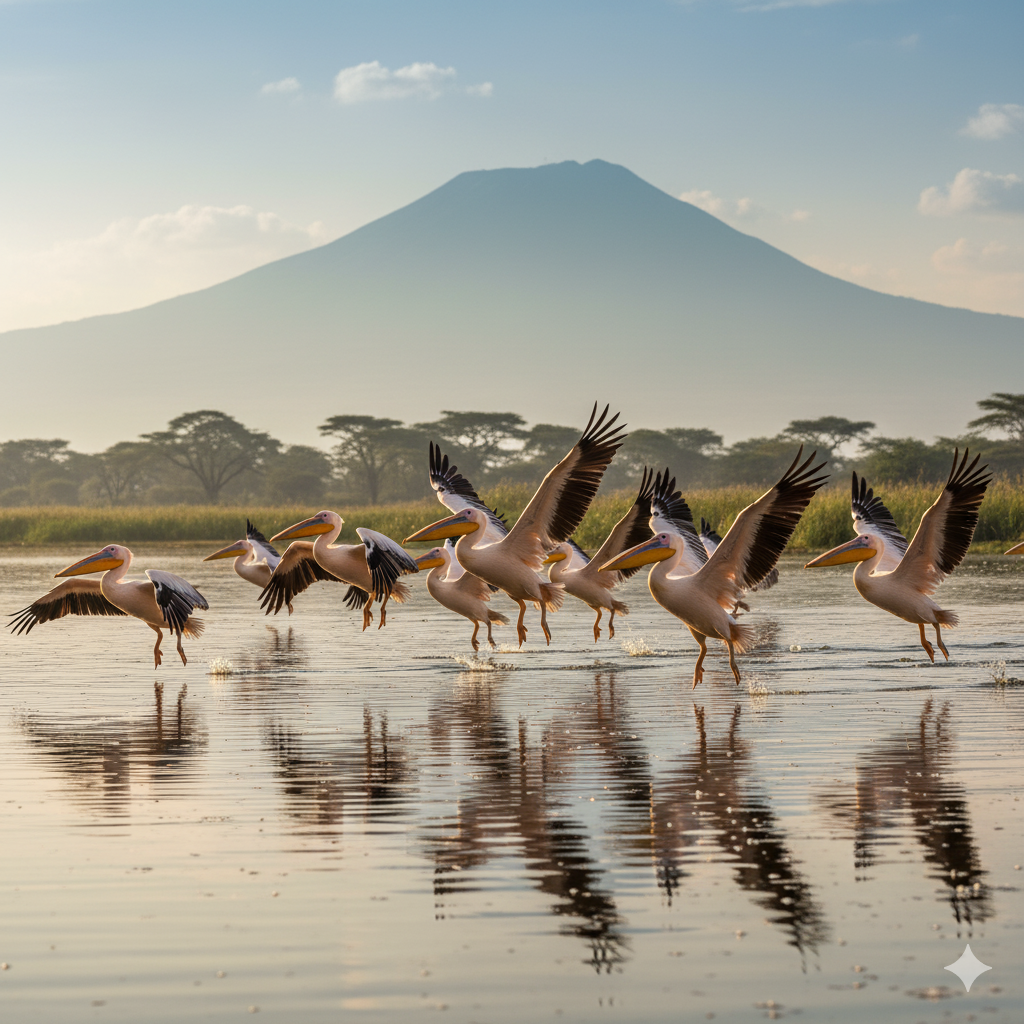
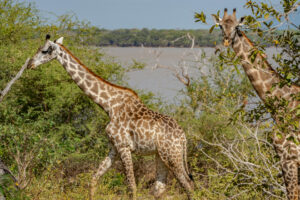
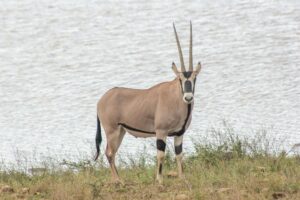
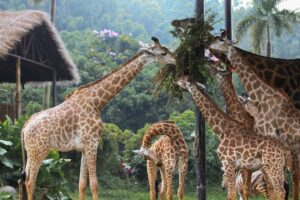
Maasai giraffe, with their distinctive irregular spots, are common. The park also hosts lesser kudu, oryx, and over 400 bird species. The dried lake bed of Lake Amboseli, usually a white expanse of baked clay, occasionally floods after heavy rains, attracting flamingos and pelicans.

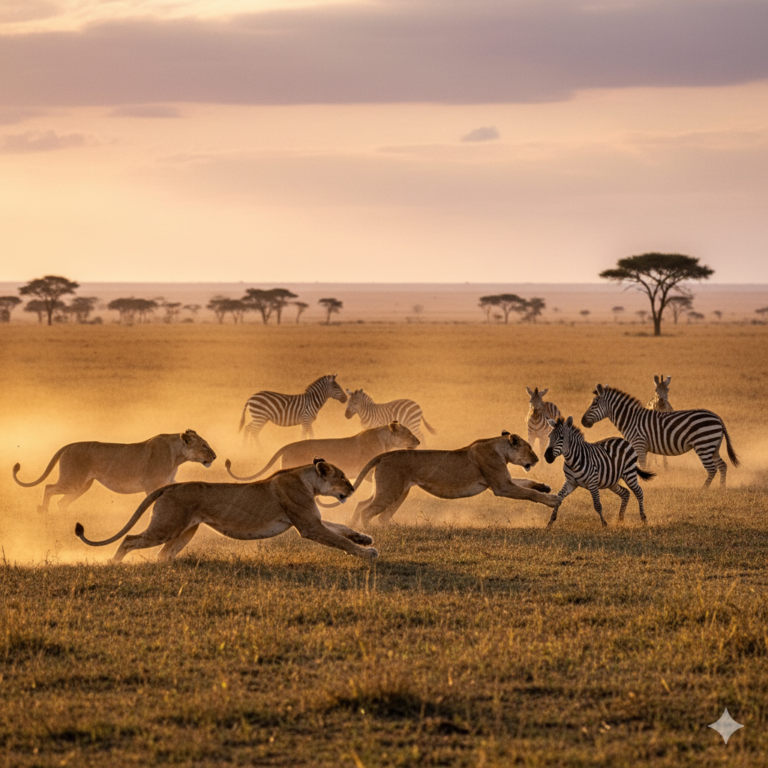
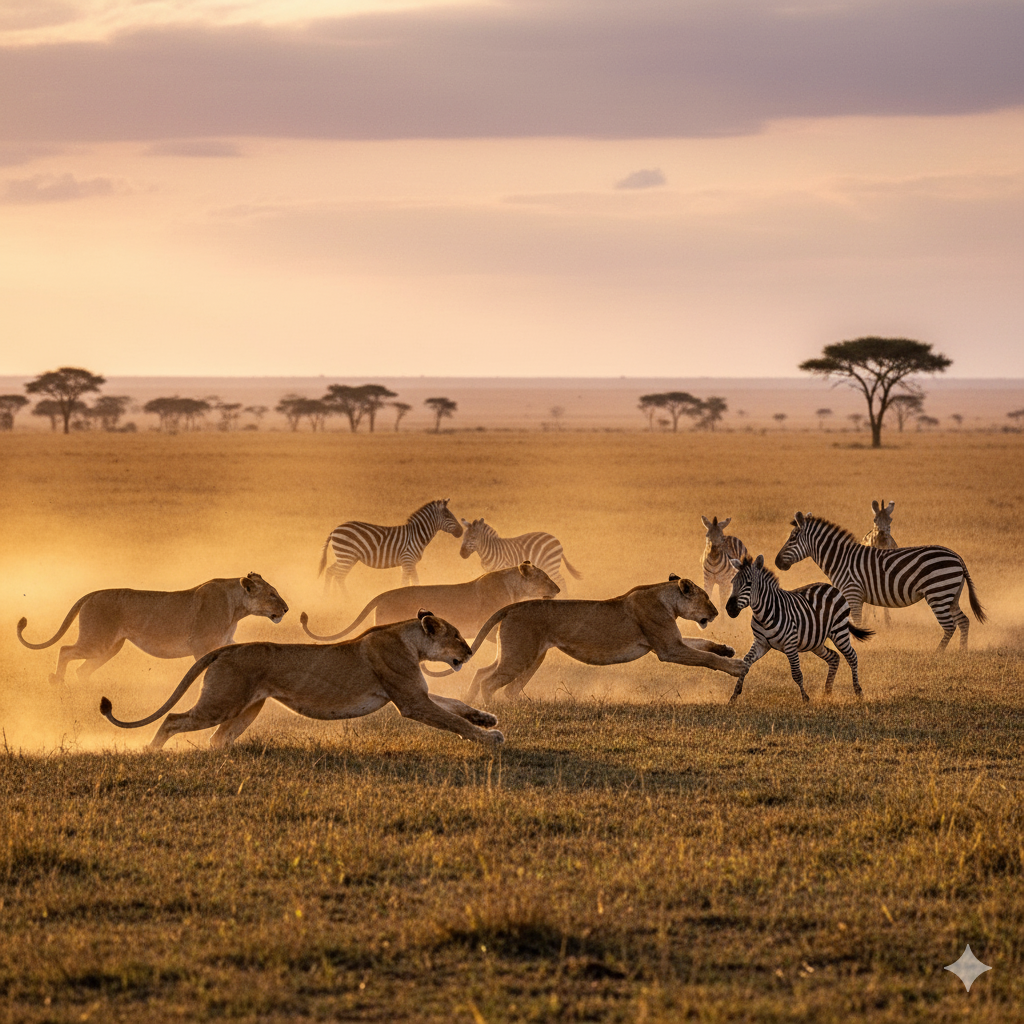
Game drives here offer variety—one moment you’re photographing elephants against the mountain, the next you’re watching a lioness stalk zebra near the swamp edge.
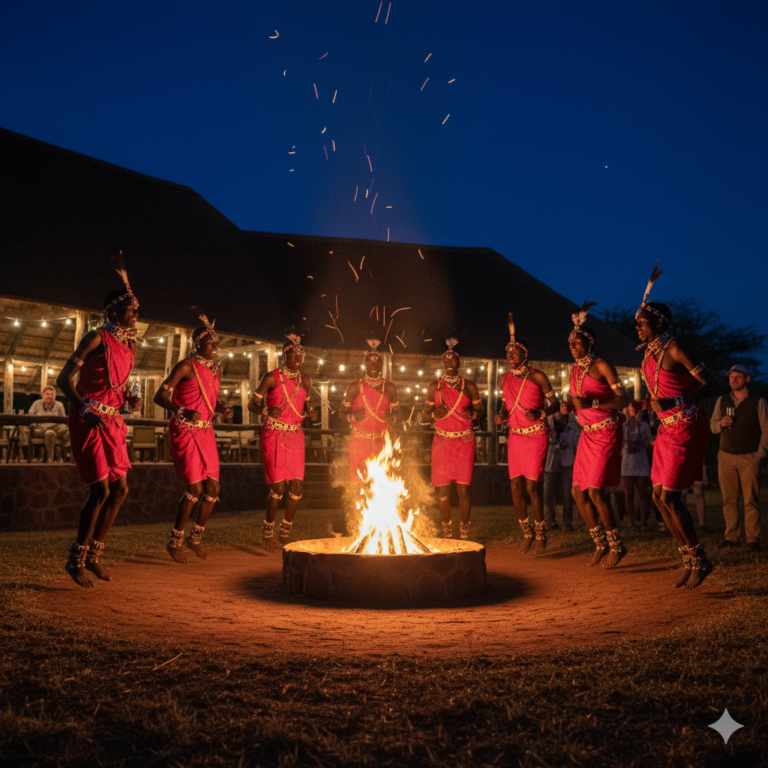
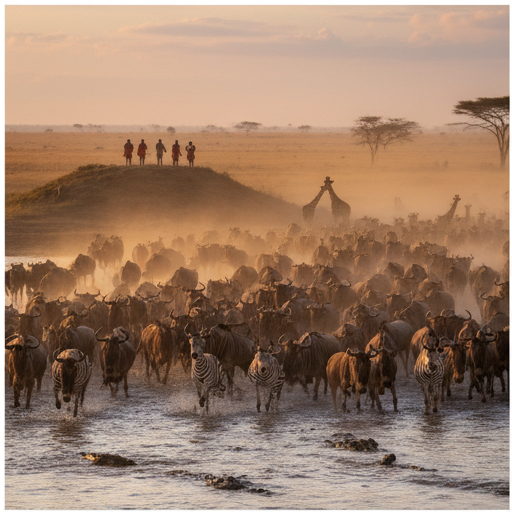
Exploring Amboseli: From Elephant Swamps to Kilimanjaro Views

Enkongo Narok Swamp: The Elephant Heartland

Enkongo Narok is the largest and most famous of Amboseli’s permanent swamps. Fed by underground rivers from Kilimanjaro, it provides year-round water that sustains the park’s highest concentrations of elephants, buffalo, and hippos. This is where you’ll capture those iconic images: elephants emerging from the water, their trunks raised, Kilimanjaro floating in the background.

The swamp edges are prime game viewing areas. Herds gather here throughout the day, especially in the dry season when water elsewhere is scarce. The vegetation is lush—papyrus, reeds, and grasses that attract a staggering variety of birds. African fish eagles call from dead trees. Herons stalk the shallows. Kingfishers dive from overhanging branches.
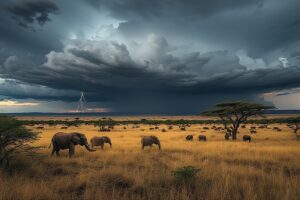
Morning drives to Enkongo Narok offer the best light and the clearest mountain views. By afternoon, clouds often build over Kilimanjaro, but the wildlife action continues.

Observation Hill: The Park's Best Panorama

Observation Hill is the highest point in Amboseli, offering panoramic views of the entire park. From here, you can see the swamps spread out below, the plains stretching toward Kilimanjaro, and on clear days, the mountain itself in all its glory. It’s the perfect place for orientation, for photography, for simply sitting and absorbing the scale of this landscape.

A short walk to the summit rewards you with 360-degree views. Early morning is best, when the light is soft and Kilimanjaro is most visible. The hill also offers excellent game viewing—elephants, buffalo, and zebra are often visible on the plains below.

The hill has cultural significance too—it was used as a lookout by Maasai herders for generations, watching over their cattle and watching for predators.

Lake Amboseli: The Dried Lake Bed

Lake Amboseli is a contradiction—it’s usually not a lake at all. For most of the year, this ancient lake bed is a vast expanse of baked white clay, cracked into geometric patterns, shimmering with mirages. It’s an otherworldly landscape, empty and beautiful, where heat devils dance on the horizon.

After heavy rains, the lake can fill with water, transforming the landscape overnight. When this happens—rarely, unpredictably—the lake attracts thousands of flamingos, pelicans, and other water birds, creating a spectacle that photographers dream about.

Even when dry, the lake bed is worth visiting. The sense of scale is overwhelming. You feel small here, exposed, in a way that’s humbling. And the mirages—those shimmering illusions of water—create photographs that play with perception.

Siriwa Swamp: The Quiet Corner

While Enkongo Narok gets most of the attention, Siriwa Swamp in the park’s western sector offers a quieter, more intimate experience. Smaller and less frequented, it attracts its own wildlife concentrations—elephants, buffalo, and abundant birdlife—but with fewer vehicles.

The swamp edges are lined with yellow-barked acacias, creating beautiful compositions. The views of Kilimanjaro are excellent from this side of the park. And the sense of solitude—of having a place to yourself—adds something special to the experience.

Siriwa is particularly good in the dry season, when wildlife concentrates at remaining water sources. Morning drives here can be magical, with the sun rising over the swamp and the mountain catching the first light.

The Southern Plains: Open Savannah

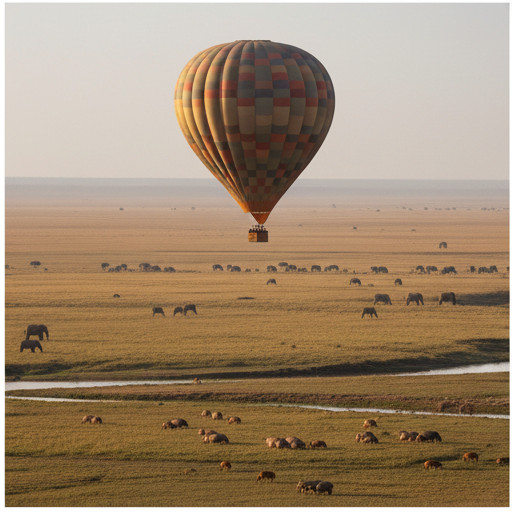
South of the swamps, toward the Tanzanian border, the landscape opens into classic savannah—acacia woodland and open grassland that stretches to the base of Kilimanjaro. This is where you’ll find Amboseli’s grazing herds: zebra, wildebeest, Thomson’s gazelle, and the predators that follow them.

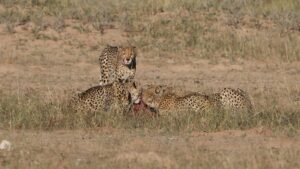
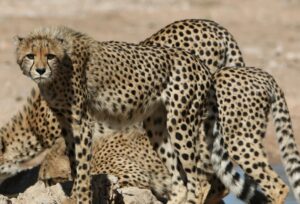
The southern plains offer the most reliable sightings of cheetah and lion. The open terrain makes hunting visible—you might watch a cheetah stalk, chase, and kill in full view. It also offers those classic savannah scenes: herds moving across golden grass, acacia trees silhouetted against the mountain.

This area is less visited than the swamps, meaning you can often have sightings to yourself. Late afternoon drives here are spectacular, with the sun setting behind Kilimanjaro and the light turning gold.

Longinye Swamp: Hippo Haven

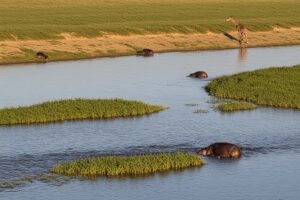
Longinye Swamp, in the eastern sector of the park, is Amboseli’s hippo stronghold. The deeper waters here support a healthy population, and viewing platforms allow you to watch these enormous animals at close range—snorting, jostling, occasionally yawning to display those formidable tusks.

The swamp also attracts elephants and buffalo, and the birdlife is excellent. Yellow-billed storks, saddle-billed storks, and herons stalk the shallows. African jacanas walk on floating vegetation. And the views back toward Kilimanjaro, across the swamp, are beautiful.

Longinye is also known for its elephant herds. Family groups often emerge from the swamp in late afternoon, their skin dripping, heading out to feed on the plains as the light softens.

Amboseli Month-by-Month: Elephants, Kilimanjaro Views & Wildlife Seasons

Amboseli National Park is Kenya’s classic safari destination—home to vast elephant herds, iconic views of Mount Kilimanjaro, and some of the most spectacular landscapes in Africa. The park follows the same rainfall patterns as the rest of Kenya, but its location at the foot of Kilimanjaro creates unique microclimates and wildlife viewing conditions.

The dry seasons (June to October and January to February) offer the best game viewing, with animals concentrated around the permanent swamps and crystal-clear views of Kilimanjaro. The wet seasons (March to May and November to December) deliver lush green landscapes, dramatic skies, and newborn wildlife—but Kilimanjaro’s peak is often cloud-covered.

Use this calendar to match your travel dates with the experiences that matter most—whether that’s photographing elephants against a snow-capped Kilimanjaro, witnessing the calving season, or experiencing the park in its emerald green glory.

All temperatures are daytime highs and nighttime lows. Rainfall is average monthly precipitation in millimeters.

Month
Rain
Min
Max
Season

Featured Destinations

Selected Complementary Destinations

Pilanesberg National Park

Top Reasons to Visit
Bird Watchers' Paradise Big 5 Wildlife Family Friendly

Meru National Park

Top Reasons to Visit
Small Intimate Park Big 5 Wildlife Family Friendly

Tsitsikamma

Top Reasons to Visit
Bird Watchers' Paradise Big 5 Wildlife Year-Round Safari

Madikwe Game Reserve

Top Reasons to Visit
Big 5 Wildlife Family Friendly

Zanzibar Archipelago

Top Reasons to Visit
Tropical Honeymoon Paradise Warm Tropical Beach

Mikumi National Park

Top Reasons to Visit
Bird Watchers' Paradise Escorted Bush Walks Big 5 Wildlife

Masai Mara National Reserve

Top Reasons to Visit
Big 5 Wildlife Year-Round Safari

Plan Your Journey to Amboseli National Park

Ready to explore? Our travel specialists are here to help craft your dream itinerary.

Chat on WhatsApp
Created by icon tripfrom the Noun Project Created by Amethyst Studiofrom the Noun Project Created by Amethyst Studiofrom the Noun Project Created by Amethyst Studiofrom the Noun Project