Why the Garden Route Is South Africa's Most Scenic Coastal Journey
The Garden Route is not a single destination. It is a corridor—300 kilometers of continuous astonishment stretching from Mossel Bay in the Western Cape to Storms River in the Eastern Cape. Forest meets ocean. Mountains fall directly into surf. Lakes reflect the sky in shades of silver and jade. And the road itself, winding through indigenous timber plantations and along cliff edges, is among the most beautiful drives on earth.
But the Garden Route is more than scenery. It is a region of lagoons and whales, of oysters and hiking trails, of canopy tours and colonial history. It is where South Africans go on holiday—and have for generations. This is not a destination you rush. The only mistake is speeding through.
Here is why the Garden Route deserves a place in every South African itinerary.
Tsitsikamma: Where Forest Meets Ocean
Tsitsikamma National Park is the Garden Route’s cathedral. Ancient yellowwood and stinkwood trees rise from the valley floor, their canopies filtering light into shafts that illuminate the forest floor. Ferns the size of small cars unfurl along hiking trails. Birds—Knysna louries, Narina trogons, African olive pigeons—call from the canopy.
Then the forest ends, and the ocean begins. The Tsitsikamma coastline is among the most dramatic in Africa. Waves crash against quartzite cliffs that have withstood storms for 450 million years. The suspension bridge at Storms River Mouth swings above churning water where river meets sea. Hikers on the Otter Trail, South Africa’s most famous multi-day trek, sleep in basic huts overlooking surf that never sleeps.
You can experience Tsitsikamma in an hour—walk the bridge, photograph the gorge, continue east. Or you can spend three days, hiking the forest trails, kayaking the river mouth, falling asleep to the sound of waves that have pounded these cliffs since before humans existed. The second option is the correct one.
Knysna: Oysters, Lagoon & Forests
Knysna is the Garden Route’s jewel. The town hugs the shores of an estuarine lagoon protected from the Indian Ocean by two massive sandstone headlands—the Knysna Heads. The channel between them is treacherous, its currents and reefs claiming ships for centuries. But the lagoon itself is calm, its waters home to the only oyster hatchery in South Africa.
Eat Knysna oysters. This is not optional. They are served fresh at the waterfront, grilled with garlic and cheese, natural with lemon, or Kilpatrick. Order a dozen. Order another dozen. You will not find oysters this good outside France or Japan.
Beyond the lagoon, the Knysna Forest stretches toward the Outeniqua Mountains. This is indigenous afro-temperate forest, home to the Knysna elephant—though the last surviving cow, known simply as ‘the Matriarch,’ is rarely seen and believed to be the last of her kind. You are unlikely to encounter elephants. You will encounter century-old yellowwoods, hiking trails, and the sense that you have entered something ancient and undisturbed.
Plettenberg Bay: Beaches, Whales & Wildlife
Plettenberg Bay—’Plett’ to those who return annually—is the Garden Route’s beach capital. Robberg Peninsula extends into the Indian Ocean like a pointing finger, its sandstone cliffs providing vantage points for watching southern right whales between June and November. Common dolphins surf the waves. Cape fur seals haul themselves onto rocks at the peninsula’s tip.
The beaches themselves are spectacular. Lookout Beach, Robberg Beach, Keurboomstrand—white sand, warm water (by Cape standards), and backdrops of forested hills. This is family holiday territory. Children learn to surf here. Grandparents walk the Robberg Nature Reserve trail, 5.7 kilometers of coastal path with views that justify the entrance fee many times over.
Plett also offers the region’s most reliable wildlife encounters outside the ocean. Birds of Eden, the world’s largest free-flight aviary, houses over 3,500 birds. Monkeyland, adjacent, is a primate sanctuary where gibbons, capuchins, and lemurs move freely through indigenous forest. And Tenikwa Wildlife Rehabilitation Centre cares for injured and orphaned wildcats—serval, caracal, leopard.
Wilderness & The Lakes
Wilderness is the Garden Route’s quiet heart. This village of 6,000 residents sits between the Outeniqua Mountains and the Indian Ocean, its identity shaped by the chain of lakes that punctuate the coastline. Touw River, Serpentine, Island Lake, Langvlei, Rondevlei—each connected, each distinct, each accessible by canoe or kayak.
This is the Garden Route for paddlers. You can launch from the village center and spend hours navigating reed-lined channels, emerging onto lakes where herons hunt and kingfishers dive. The water is dark, stained by fynbos tannins, reflecting the sky in shades of pewter and indigo.
The Half-Collared Kingfisher Trail follows the Touw River gorge through indigenous forest. The Wilderness Section of the Garden Route National Park protects dune forest, fynbos, and the only remaining viable population of the Endangered Knysna seahorse. And the Map of Africa viewpoint, a short drive up the mountain, offers a panorama of the entire lakes district—a view that explains, in a single glance, why this region has captivated South Africans for generations.
Mossel Bay: Where History Begins
Mossel Bay is where the Garden Route begins—both geographically and historically. In 1488, Bartolomeu Dias anchored here, seeking shelter from Atlantic storms. His crew drew water from a fountain that still flows today, beneath a milkwood tree now more than 500 years old. The Post Office Tree, as it became known, served as a message drop for Portuguese mariners; letters placed in a boot were collected by passing ships and delivered to Europe.
Today, the Dias Museum Complex preserves this history. A full-scale replica of Dias’s caravel sits in a glass enclosure. The milkwood tree still stands. And the fountain, unremarkable in appearance, has flowed continuously for longer than any European structure in South Africa.
But Mossel Bay is not merely a museum. St Blaize Trail follows the cliff edge from the lighthouse to Dana Bay, 13.5 kilometers of coastal hiking with views of the ocean where southern right whales breach within sight of the path. Great white sharks patrol the waters. And the Santos Beach, sheltered and warm, is the Garden Route’s first beach—the place where travelers shed their inland layers and begin to exhale.
Addo: Elephants & Beyond
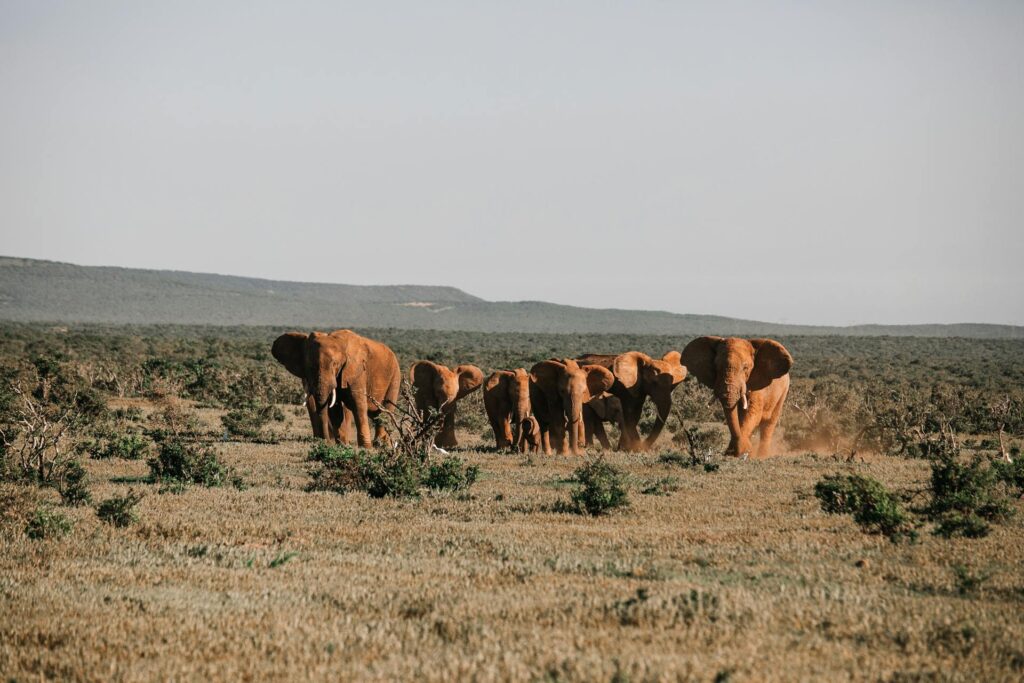
Addo Elephant National Park is not strictly on the Garden Route. It is a two-hour drive east of Storms River, beyond the official boundary. But no comprehensive Garden Route itinerary omits it—and for good reason.
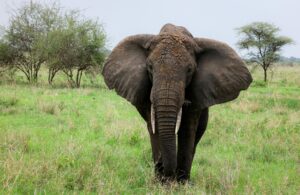
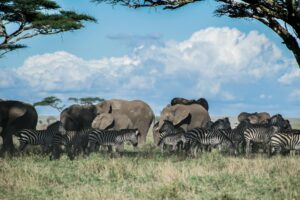
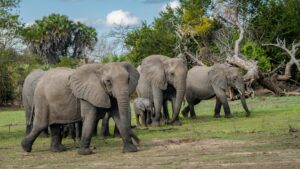
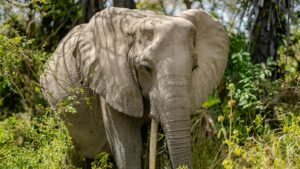
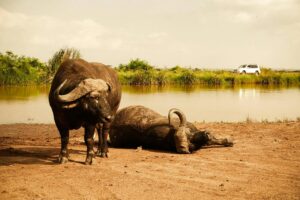
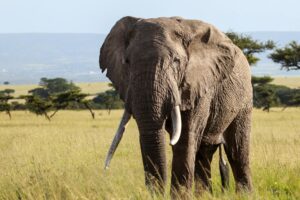
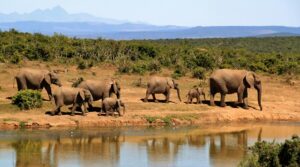
Addo began as a sanctuary for eleven elephants in 1931. Today, it protects over 600, alongside Cape buffalo, black rhino, and the densest population of great white sharks in any national park on earth—a quirk of geography that includes the Bird and St Croix Island groups. This is the only park on earth where you can track elephant in the morning and dive with great whites in the afternoon.
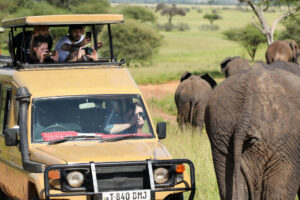
The main game viewing area is malaria-free, self-drive friendly, and accessible from the Garden Route in under two hours. The Nyathi and Kabouga sections offer wilderness trails for hikers and mountain bikers. And the marine protected area, accessible from the park’s Algoa Bay islands, supports breeding colonies of African penguin, Cape gannet, and crowned cormorant.
Addo is the rare destination that delivers Big Five safari, marine wildlife, and conservation history—all without requiring a single malaria tablet. It is the Garden Route’s perfect conclusion.
Self-Drive Freedom
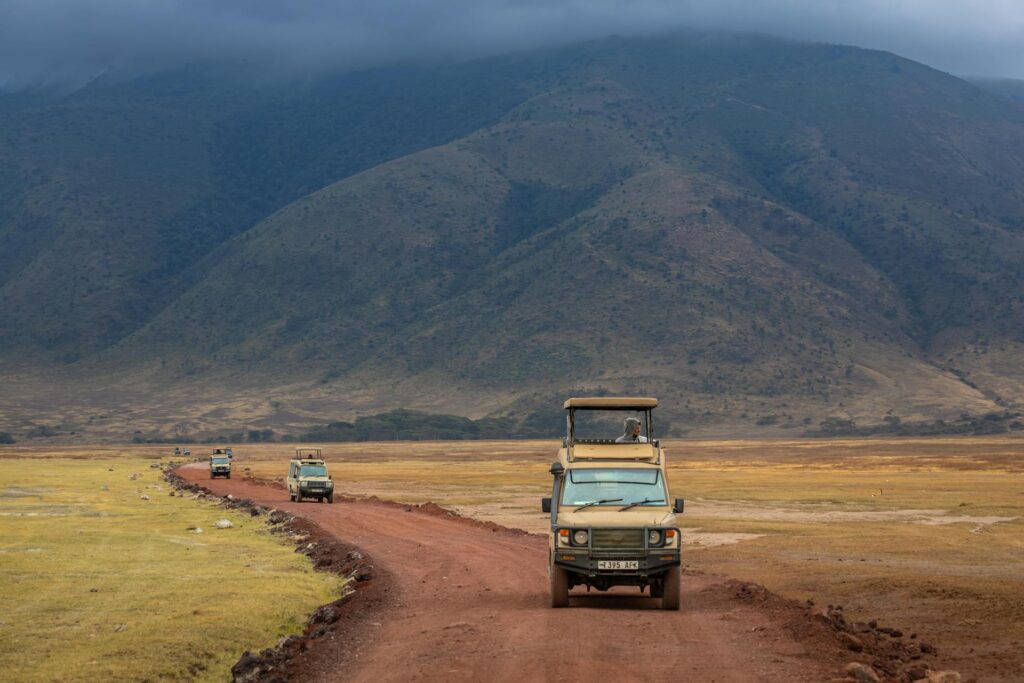
The Garden Route was designed for self-drive travel. The N2 highway connects every major town, but the region’s soul lives on the secondary roads—the R339 over Prince Alfred’s Pass, the R340 to Uniondale, the dirt tracks that dead-end at remote beaches and forest trailheads.
Rent a car. Not an SUV—a standard sedan will manage all paved routes and most gravel. Drive with windows down. Stop at every viewpoint. Buy fruit from roadside stalls. If you see a sign for a waterfall, follow it. If the ocean looks particularly blue from the highway, pull over and walk down.
The Garden Route is not a checklist. It is not about maximizing destinations or minimizing drive times. It is about the drive itself—the curve of the coast, the light through the forest, the moment you crest a hill and see the lagoon below. You cannot schedule this. You cannot optimize it. You simply have to be present.
Adventure Activities
The Garden Route is South Africa’s adventure capital. Tsitsikamma alone offers enough adrenaline to fill a week.
Bungee jumping: Bloukrans Bridge, 216 meters, is the highest commercial bungee bridge in the world. You walk a catwalk beneath the roadway, counting down with jumpmasters who have launched thousands of people into the gorge below. The freefall lasts six seconds. The memory lasts a lifetime.
Canopy tours: Slide between yellowwood trees on steel cables, moving from platform to platform at canopy level. The Tsitsikamma Canopy Tour is the original—12 slides, 30 meters high, perspectives previously available only to monkeys and birds.
Kayaking: Paddle the Storms River gorge at high tide, entering a chasm where cliffs rise 200 meters on either side. Waterfalls cascade directly into the river. Seals sometimes surf the swell.
Hiking: The Otter Trail (5 days), Tsitsikamma Trail (4 days), and numerous day hikes offer walking routes through forest, fynbos, and coastline.
Whale watching: Plettenberg Bay and Mossel Bay offer boat-based whale watching during winter and spring.
Tree-top climbing: Woodcutters Journey, an accessible canopy walk at Storms River, winds through indigenous forest at ground level—wheelchair accessible, suitable for all ages.