
Why Tsitsikamma Is the Garden Route's Cathedral of Forest & Sea
Tsitsikamma is where the Garden Route reveals its soul. Ancient yellowwood and stinkwood trees rise from the valley floor, their canopies filtering light into shafts that illuminate the forest floor. Ferns the size of small cars unfurl along hiking trails. And then, suddenly, the forest ends—and the Indian Ocean begins, crashing against quartzite cliffs that have withstood storms for 450 million years.
This is not merely a national park. It is a place of pilgrimage for hikers, a sanctuary for ancient forests, and a coastline of such dramatic beauty that words struggle to contain it. The name Tsitsikamma means ‘place of abundant water’ in the Khoekhoe language—a reference to the waterfalls, rivers, and rain that sustain this lush, green world.
Here is why Tsitsikamma deserves a place in every Garden Route itinerary.
Storms River Mouth: Where River Meets Ocean
The Storms River Mouth is Tsitsikamma’s postcard image—and unlike many postcard images, it delivers. A suspension bridge spans the churning mouth of the river, where fresh water meets salt in an eternal collision. The cliffs rise 200 meters on either side, draped in coastal forest that somehow clings to near-vertical slopes.
You can experience it in an hour: walk the boardwalk to the bridge, photograph the gorge, continue to the lookout point. Or you can spend three days, hiking the trails, kayaking the river mouth, and falling asleep to the sound of waves that have pounded these cliffs since before humans existed.
The bridge itself is an experience—it sways gently as you cross, the water churning below, the gorge opening before you. On one side, the river emerges from ancient forest; on the other, the ocean stretches to Antarctica. Stand in the middle, look down, and understand why this place draws visitors from around the world.
The Otter Trail: South Africa's Greatest Hike
The Otter Trail is South Africa’s most famous multi-day hike—and for good reason. Five days, four nights, 42 kilometers of coastline that most travelers only glimpse from viewpoints. The trail traverses the Tsitsikamma coast from Storms River Mouth to Nature’s Valley, crossing rivers, climbing cliffs, and sleeping in basic huts overlooking surf that never sleeps.
This is not a luxury experience. You carry your own pack (or pay for a porter). You sleep in communal huts with bunk beds. You cook your own food. But the rewards are incomparable: beaches you will have entirely to yourself, forests where the only sounds are birds and waves, and a sense of accomplishment that no day hike can provide.
Bookings open months in advance and sell out within hours. If you want to walk the Otter, plan ahead—way ahead. If you cannot secure a booking, day hikes on sections of the trail offer glimpses of what makes this route legendary.
Tsitsikamma Canopy Tour: Flying Through the Forest
The Tsitsikamma Canopy Tour was South Africa’s first—and remains its finest. You slide between ancient yellowwood trees on steel cables, moving from platform to platform at canopy level, 30 meters above the forest floor. The perspective is unforgettable: orchids growing on branches, birds flying below you, the forest spreading out like a green carpet.
The tour lasts about three hours, with 12 slides ranging from gentle glides to exhilarating zips. Guides accompany each group, sharing information about the forest ecology and ensuring safety. No experience is necessary—if you can walk to the first platform, you can complete the tour.
Book ahead, particularly in peak season. Early morning tours offer the best light and the greatest chance of seeing wildlife.
Kayaking the Storms River Gorge
Paddle into the Storms River gorge at high tide, and you enter a world that feels prehistoric. The cliffs rise sheer on either side, their faces draped in ferns and orchids. Waterfalls cascade directly into the river. The light filters down in shafts, illuminating the dark water. Seals sometimes surf the swell at the mouth; hadedas call from the forest.
Guided kayak tours operate daily, weather permitting. You paddle approximately 2 kilometers up the gorge, through water so clear you can see the bottom, past rock formations carved by millennia of flow. The guides know the river intimately—where the otters den, where the fish eagles perch, where the best echoes for yodeling.
No experience required. Double kayaks mean you can share the paddling. Book ahead, and go early to avoid afternoon winds.
Bloukrans Bridge: The World's Highest Bungee
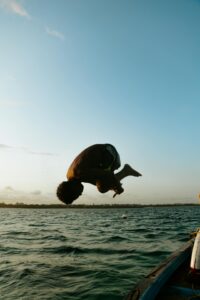
At 216 meters, Bloukrans Bridge is the highest commercial bungee bridge in the world. You walk a catwalk beneath the roadway, counting down with jumpmasters who have launched thousands of people into the gorge below. The freefall lasts six seconds. The memory lasts a lifetime.
You do not have to jump to appreciate Bloukrans. The bridge itself is an engineering marvel, spanning the Bloukrans River at the border between the Western and Eastern Cape. The viewing platform offers spectacular views of the gorge. And watching others jump—their hesitation, their commitment, their screams of terror and exhilaration—is entertainment in itself.
But if you are going to bungee anywhere in the world, do it here. The setting is spectacular. The operators are professional. And 216 meters is, objectively, very high.
Ancient Forests: Yellowwood & Stinkwood
Tsitsikamma’s forests are among the few remaining examples of Southern Africa’s indigenous temperate rainforest. Yellowwood trees—South Africa’s national tree—tower 40 meters above the forest floor, some of them more than 1,000 years old. Stinkwood, prized for furniture making, grows in the understory. Ferns, mosses, and orchids carpet every available surface.
The Woodcutters Journey, an accessible boardwalk trail near Storms River Village, winds through this forest at ground level. Information boards explain the history of woodcutting in the region—men who spent weeks in the forest, felling yellowwoods with hand saws, floating them down rivers to the coast.
The Big Tree, a 36-meter-tall yellowwood estimated at 800 years old, is the forest’s celebrity. A short boardwalk leads to its base, where you can stand in its shade and contemplate time on a scale that dwarfs human existence.