Aberdare National Park – Safari Continents Travel

Aberdare National Park

Aberdare National Park

  • Best Time to Visit: Jan–Feb & Jun–Oct for clear skies and easier hiking.
  • Entry Fees: Non-residents: USD 60 adults / USD 35 children.
  • Country: Aberdare- National Park

Why the Aberdares Are Kenya's Most Mysterious Mountain Wilderness

The Aberdare Mountains rise like a green fortress from the Kenyan highlands—a volcanic range cloaked in dense forest, bamboo groves, and misty moorlands. This is a world apart from the open savannahs of the Masai Mara and Amboseli. Here, waterfalls plunge through deep ravines, bongo antelope move silently through the undergrowth, and the famous tree-climbing lions drape themselves over ancient juniper branches.

Aberdare National Park protects the heart of this mountain range—767 square kilometers of rugged, vertical terrain that shelters some of Kenya’s most elusive wildlife. It is a place of mystery, of mist, of intimate wildlife encounters from famous tree lodges that have hosted royalty and celebrities for generations.

Here is why the Aberdares deserve a place on every Kenya itinerary.

The Tree Lodges: Watching Wildlife by Night
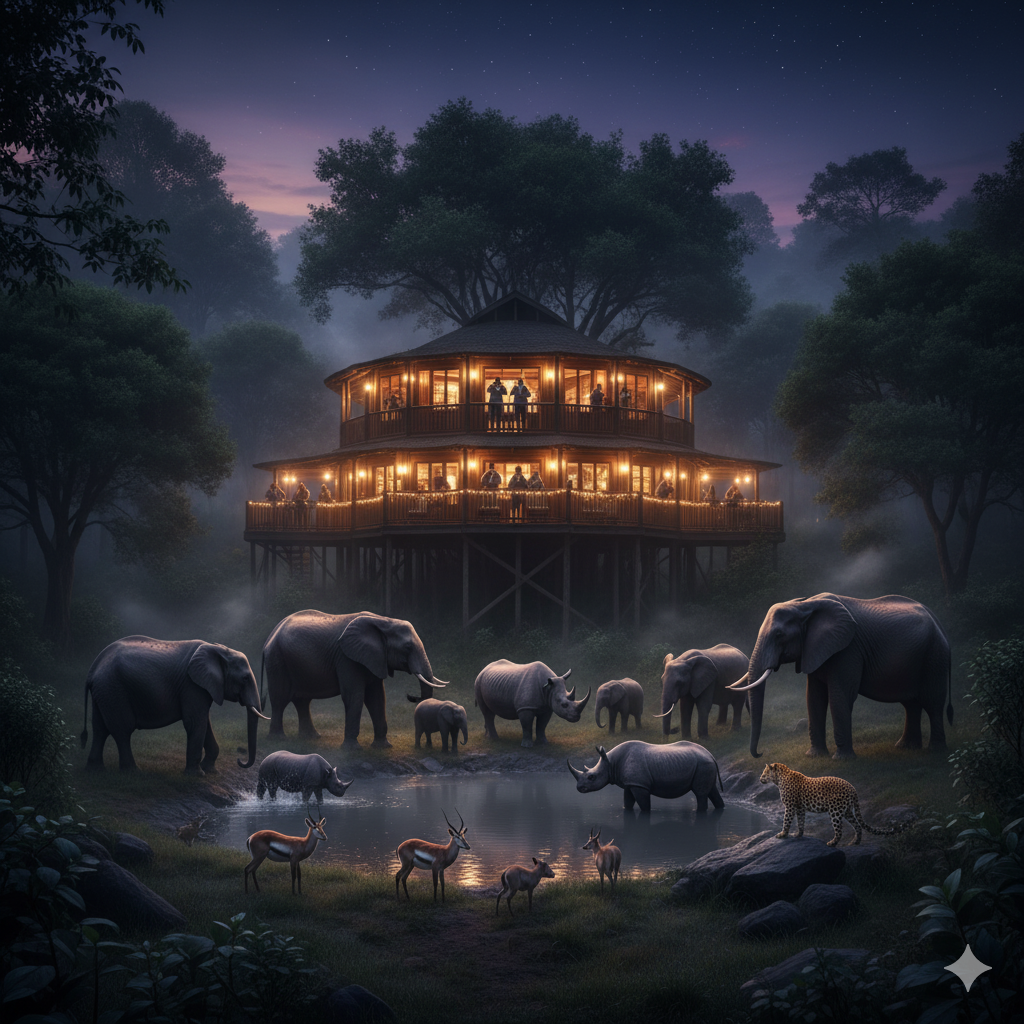
Treetops lodge

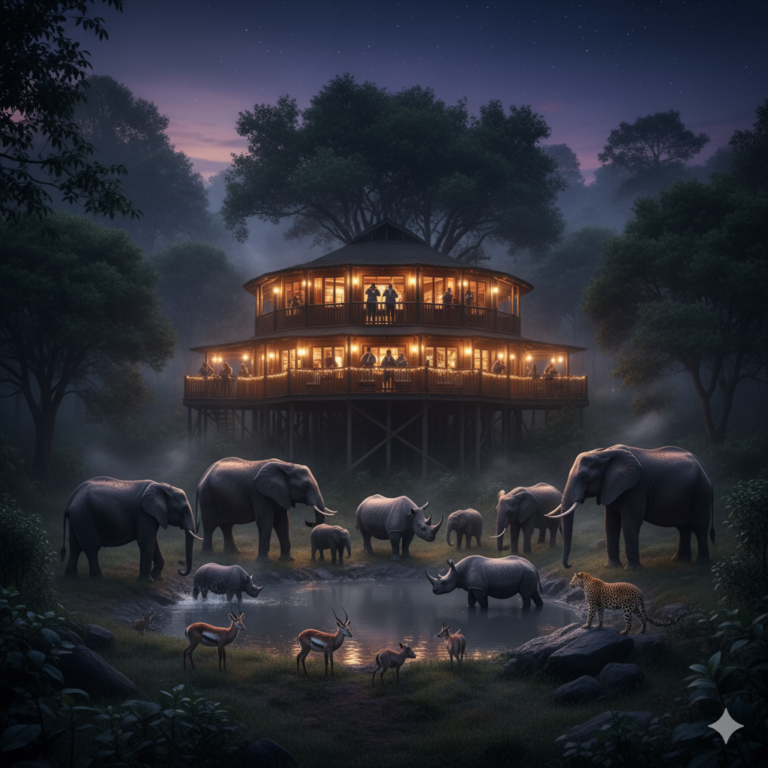
Aberdare is famous for its tree lodges—Treetops and The Ark—where you can watch wildlife from the comfort of a warm lounge as night falls over the forest. Built on stilts above waterholes and salt licks, these lodges offer front-row seats to one of Africa’s most intimate wildlife experiences.

Treetops has a special place in history. It was here, in 1952, that a young Princess Elizabeth learned of her father’s death and her own accession to the British throne. The lodge burned and was rebuilt, but the site remains iconic. The Ark, designed to resemble Noah’s Ark, offers multiple viewing decks overlooking a floodlit waterhole.

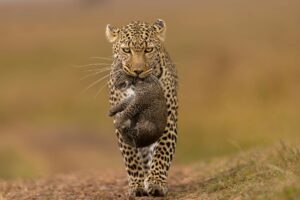
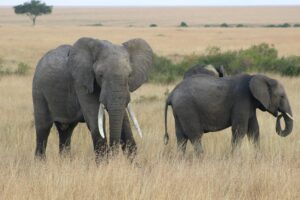
As darkness falls, the forest comes alive. Elephants emerge from the shadows, buffalo gather at the salt lick, and occasionally a leopard slips through the undergrowth. You watch from warmth, sipping tea, as the night unfolds.

The Elusive Bongo: Africa's Rarest Forest Antelope
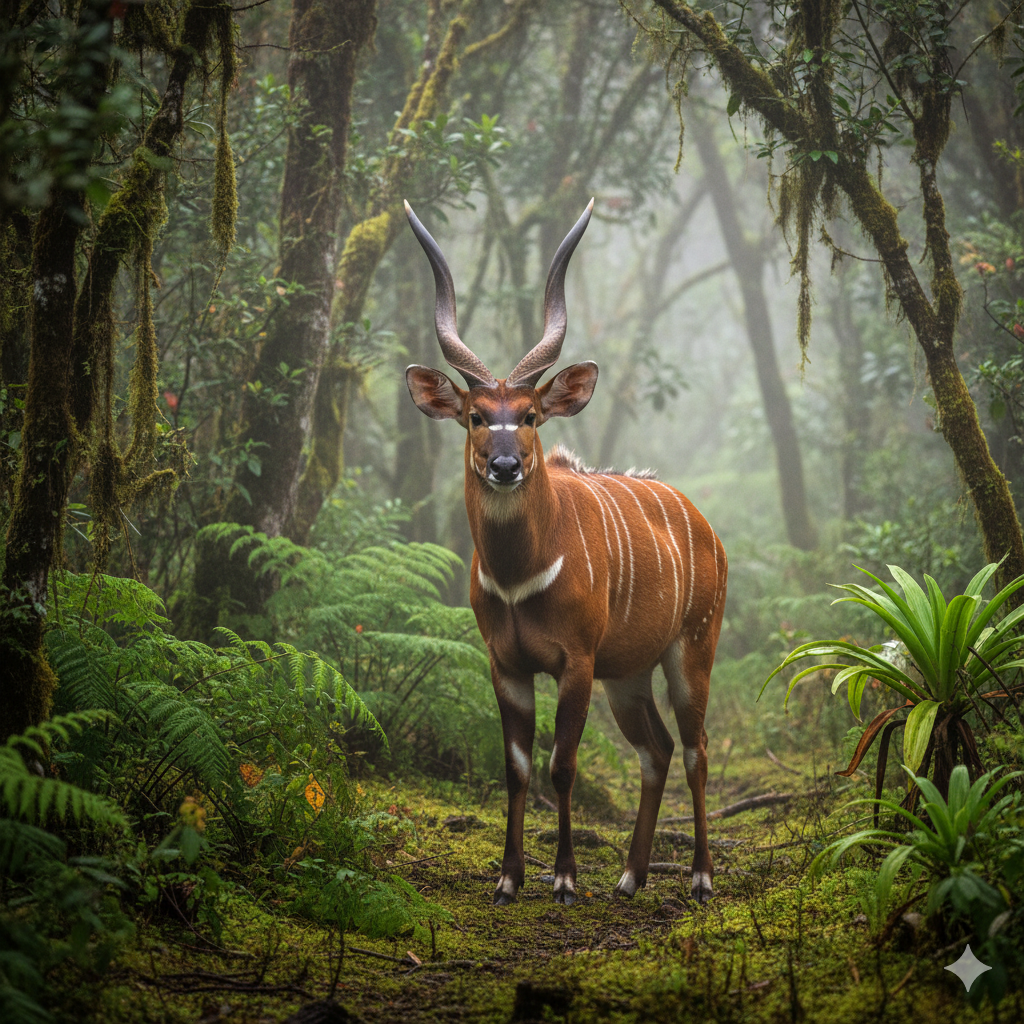
Mountain bongo

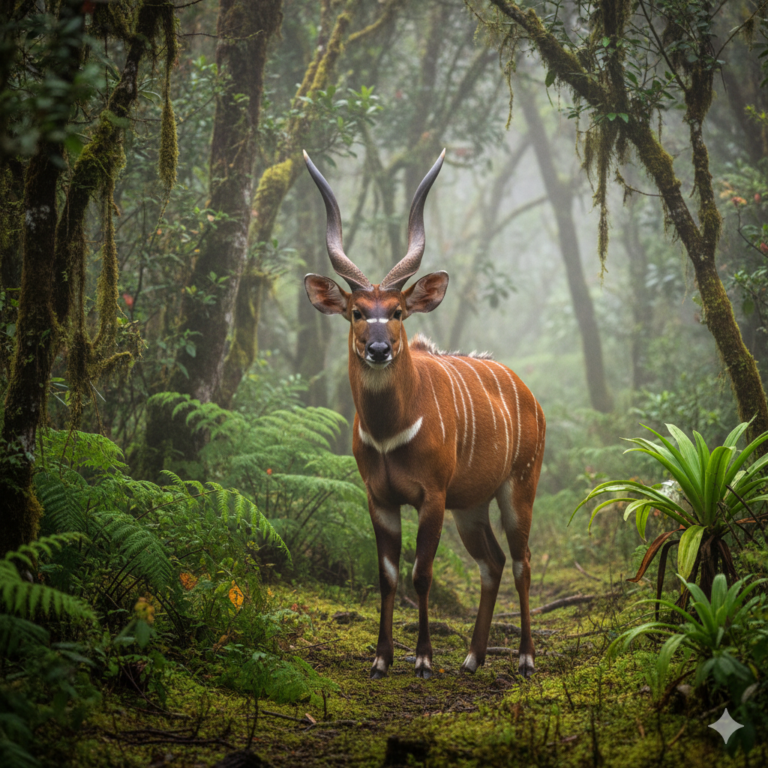
The Aberdares are one of the last strongholds of the mountain bongo—one of Africa’s rarest and most beautiful antelope. With their chestnut coats, white stripes, and spiraling horns, bongo are the ghosts of the mountain forest. They move silently through the bamboo, rarely seen, always mysterious.

Few visitors are lucky enough to spot a bongo in the wild. They are shy, secretive, and their population in the Aberdares is critically endangered—perhaps fewer than 100 individuals remain. Conservation efforts, including a successful breeding program, offer hope for their survival.

Even if you don’t see one, knowing they are there—moving through the misty forests—adds to the Aberdares’ sense of mystery and wildness.

Tree-Climbing Lions: A Unique Aberdare Phenomenon

Tree-climbing lion

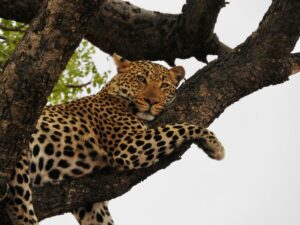
While tree-climbing lions are also found in Uganda’s Ishasha and Tanzania’s Lake Manyara, the Aberdares have their own population of these arboreal cats. Here, among the ancient juniper and yellowwood trees, lions drape themselves over branches during the day, escaping the damp forest floor and gaining a vantage point over their territory.

Why do they climb? Theories abound—to avoid biting insects, to catch cooling breezes, to spot prey from above. Whatever the reason, seeing a lion sprawled across a tree branch is one of Africa’s most surreal wildlife encounters.

The tree lodges offer the best chance of sightings—the waterholes attract prey, and the lions know this. Night drives with park rangers occasionally reveal these arboreal cats.

Waterfalls, Moorlands & Mountain Scenery
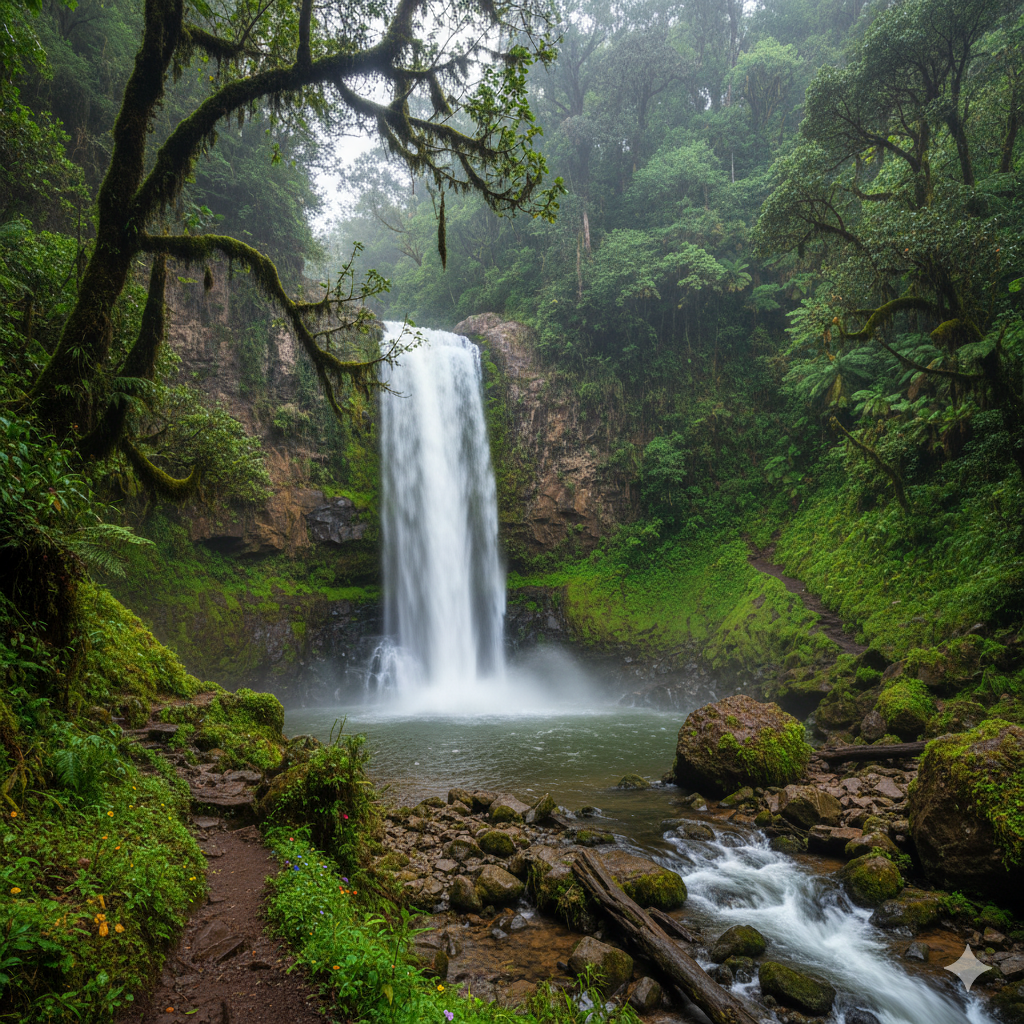
Aberdare waterfall

The Aberdares are spectacularly beautiful. The eastern slopes are draped in dense forest, pierced by deep ravines where waterfalls plunge hundreds of meters. The Karuru Falls, the highest in the park, drop 273 meters in three breathtaking leaps. Gura Falls, nearby, is equally dramatic.

Above the forest, the landscape opens into rolling moorlands—tussock grass, giant lobelias, and groundsels that look like they belong on another planet. On clear days, you can see across to Mount Kenya, rising 5,199 meters to the northeast.

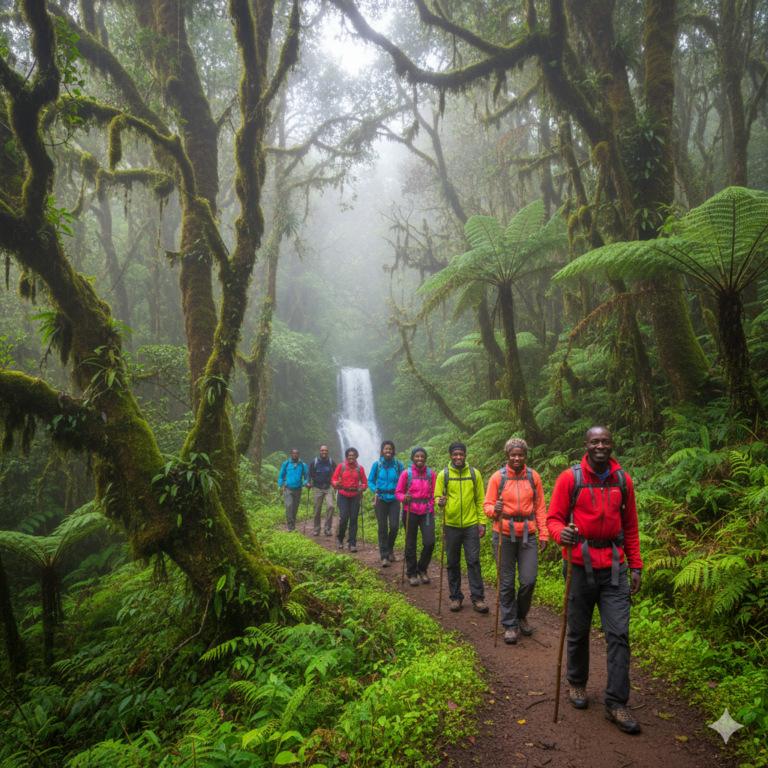
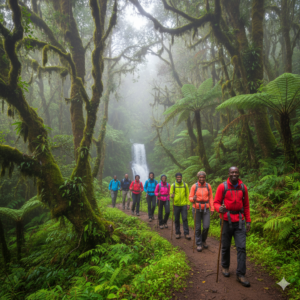
Hiking trails lead through bamboo forest, across moorlands, and to waterfall viewpoints. The contrast between the misty, moss-draped forests and the open moorlands is striking.

Black Rhino Sanctuary: Conservation Success

Black rhino in forest

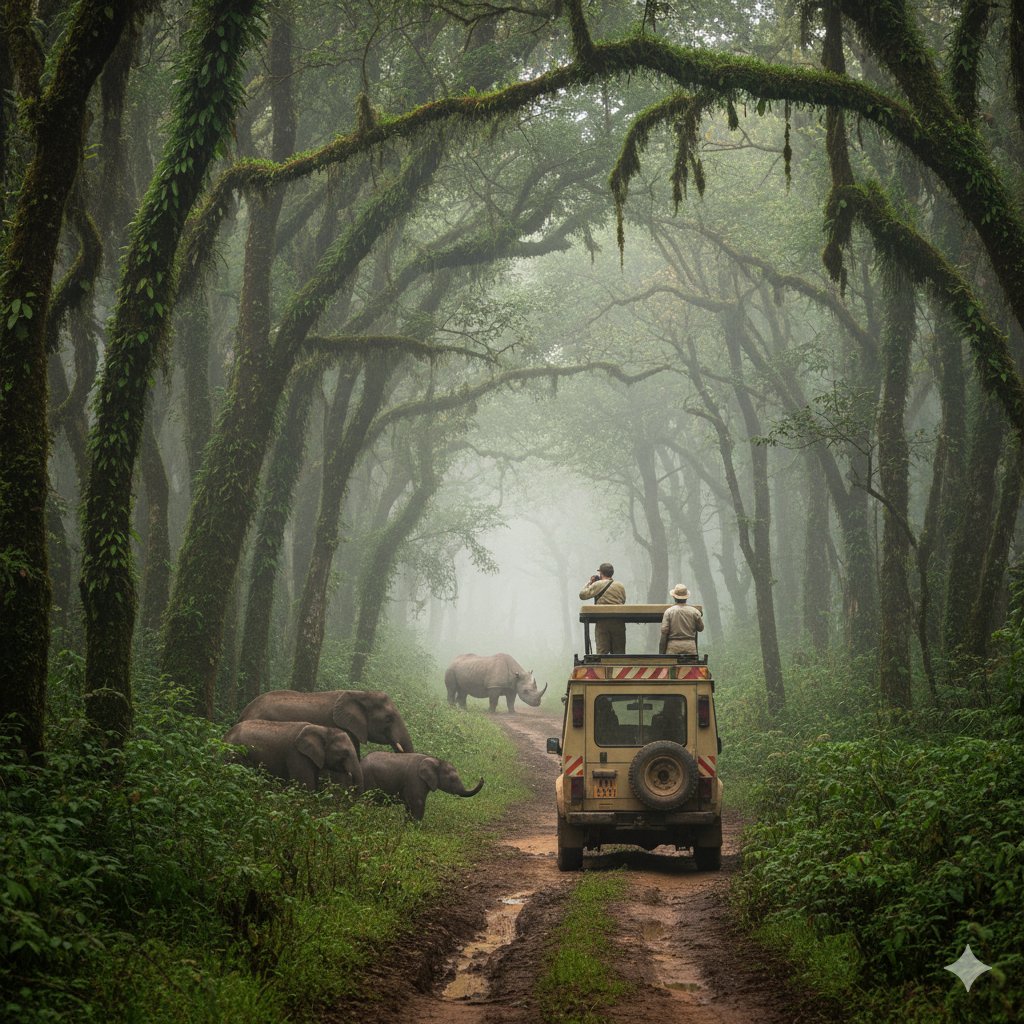
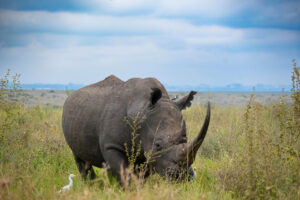
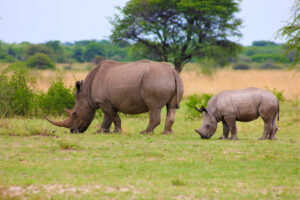
The Aberdares play a crucial role in Kenya’s rhino conservation. The park’s dense forests provide ideal habitat for black rhino—shy, solitary, and perfectly camouflaged in the undergrowth. A dedicated rhino sanctuary within the park protects a growing population of these critically endangered animals.

Sightings are never guaranteed—black rhino are far more elusive than their white cousins. But the park rangers know their territories, and night drives from the tree lodges occasionally reveal them at the salt licks. The sense of encountering such a rare creature in the wild is unforgettable.

The conservation work here is vital. Poaching devastated rhino populations across Africa. In the Aberdares, they are making a comeback.

The Moorlands: A Landscape Like No Other
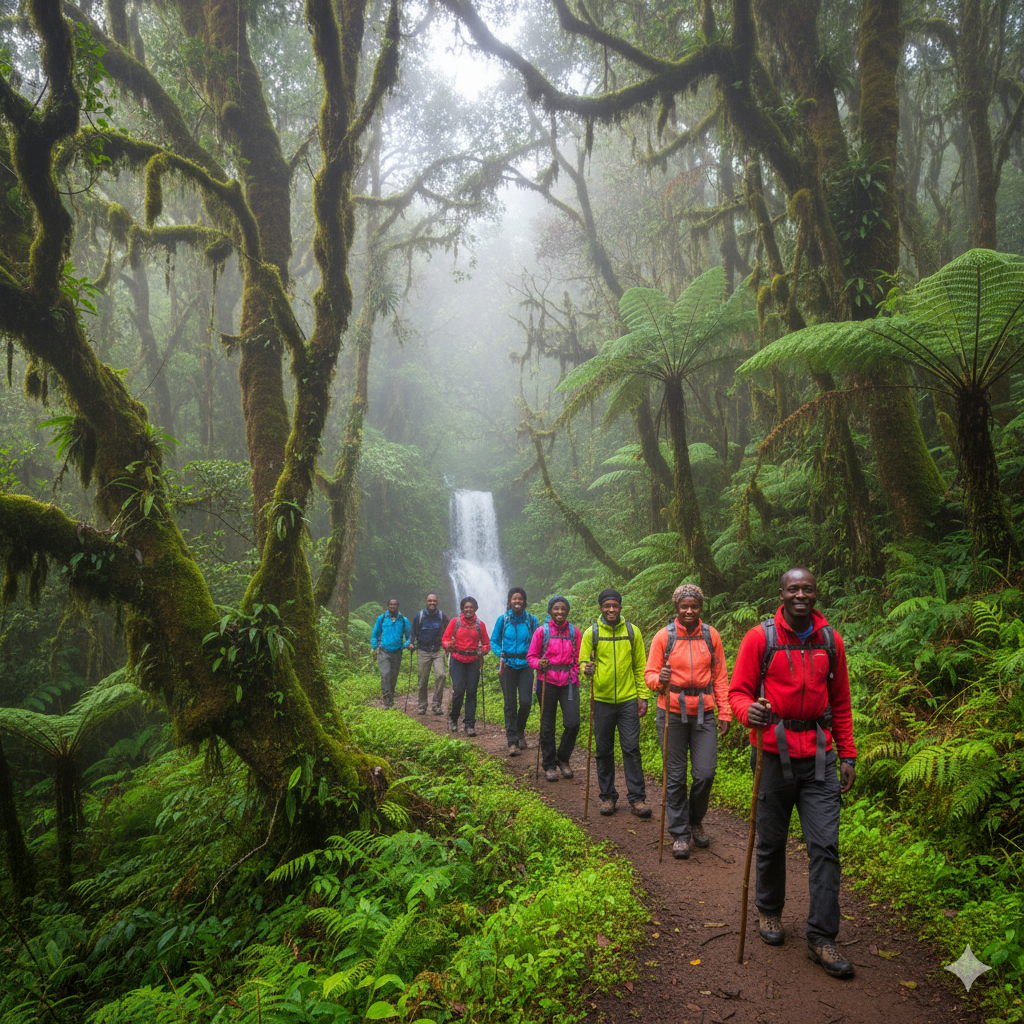
Aberdare moorlands

Above the bamboo zone, above the forest, the Aberdares open into a world that feels prehistoric. The moorlands stretch for kilometers—rolling hills of tussock grass, dotted with giant lobelias that can reach 3 meters tall, and groundsels that look like Dr. Seuss creations. Streams trickle through peat bogs, and the air is thin and cool.

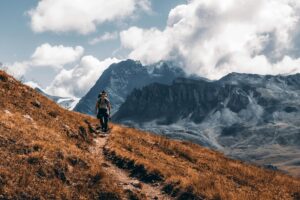
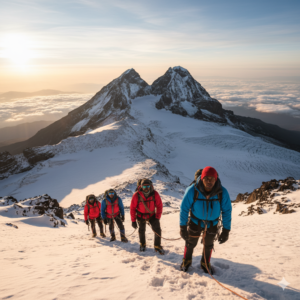
This is hiking country. Trails lead to peaks like Kinangop (3,906m) and Satima (3,999m), the park’s highest points. On clear days, the views are staggering—across the Great Rift Valley to the west, toward Mount Kenya to the east.

The moorlands are also home to unique wildlife: eland, duiker, and the elusive mountain reedbuck. Birdlife includes the Aberdare cisticola, found nowhere else on earth.
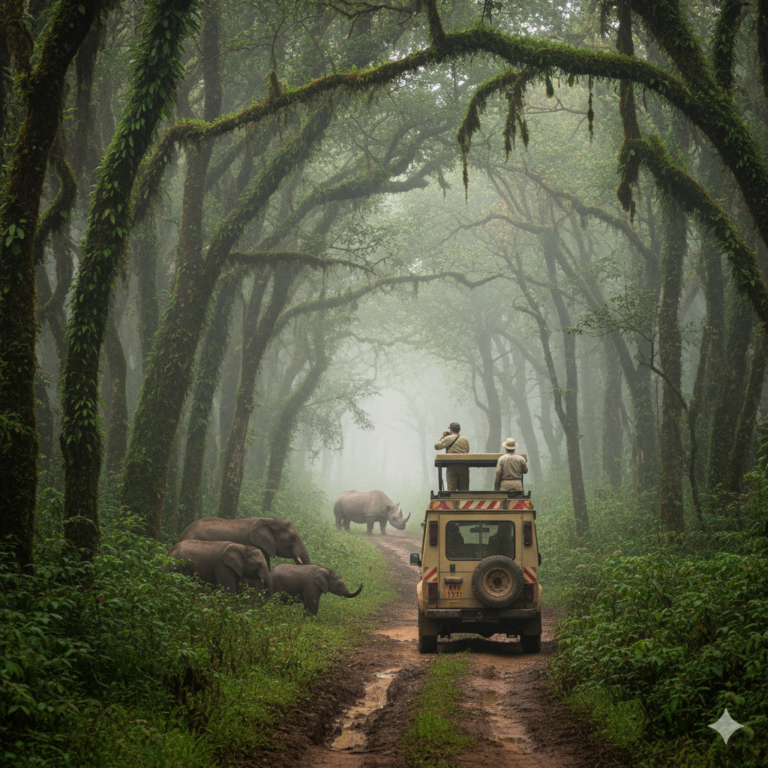
Exploring the Aberdares: From Tree Lodges to Moorland Peaks

Treetops Area: The Iconic Wildlife Viewing Zone

The area around Treetops lodge is the most famous in the park—and for good reason. A permanent salt lick and waterhole attract a constant stream of wildlife, visible from the lodge’s multiple viewing decks. Elephant, buffalo, rhino, and occasionally leopard come to drink, often within meters of the windows.

The forest here is dense, but clearings around the lodge offer the best wildlife viewing in the park. Night drives with park rangers explore the surrounding trails, offering chances to see nocturnal species. The sense of history—of royalty, of decades of safari tradition—adds to the experience.

This area is also the starting point for several short walking trails, though you must be accompanied by an armed ranger—the forest holds elephant, buffalo, and leopard.

The Ark Area: Wildlife Viewing from Noah's Ark

The Ark, located in the park’s western sector, offers a different perspective on Aberdare’s wildlife. Built to resemble Noah’s Ark, the lodge has multiple viewing decks overlooking a floodlit waterhole and salt lick. The design means you can watch wildlife from ground level or from above—a unique experience.

The forest around The Ark is particularly good for elephant and buffalo. The salt lick attracts large herds, especially in the dry season. Night viewing is spectacular—the floodlights reveal animals that would otherwise remain hidden.

This area is less visited than Treetops, offering a quieter experience. Walking trails with armed rangers explore the surrounding forest, where you might spot the elusive bongo.

Karuru Falls: The Park's Highest Waterfall

Karuru Falls is the Aberdares’ most spectacular waterfall—273 meters of water plunging in three distinct leaps through a forested ravine. The viewpoint, accessible by a short walk from the road, offers breathtaking views of the falls and the surrounding valley. On clear days, the spray catches rainbows in the afternoon light.

The area around the falls is rich in birdlife—crowned eagles soar overhead, while turacos and starlings move through the forest canopy. The walk to the viewpoint is easy and suitable for most fitness levels. An armed ranger accompanies all visitors—wildlife is present, including the occasional elephant.

Nearby, the Gura Falls drop 305 meters in a single, thunderous plunge. A longer hike connects the two waterfalls through beautiful forest.

Kinangop Peak: The Southern High Point

Kinangop Peak, at 3,906 meters, is the Aberdares’ second-highest point and the southern anchor of the range. The hike to the summit is challenging but rewarding—a full day’s trek through bamboo forest, across moorlands, and finally up a rocky ridge to the top.

From the summit, the views are staggering. To the east, Mount Kenya rises above the clouds. To the west, the Great Rift Valley stretches to the horizon. Below, the moorlands roll away in waves of tussock grass and giant lobelias.

The hike requires fitness, proper gear, and an armed ranger guide. It’s not for everyone. But for those who make the effort, it’s one of Kenya’s great mountain experiences.

The Moorlands: A Prehistoric Landscape

Above the bamboo zone, above the forest, the Aberdares open into a world that feels like another planet. The moorlands stretch for kilometers—rolling hills of tussock grass dotted with giant lobelias that can reach 3 meters tall. These plants, found only in East Africa’s high mountains, look like they belong in a Dr. Seuss illustration.

Streams trickle through peat bogs. The air is thin and cool. Birdlife includes the Aberdare cisticola, found nowhere else on earth. Eland and duiker move across the open slopes, visible from a distance in a way that forest animals never are.
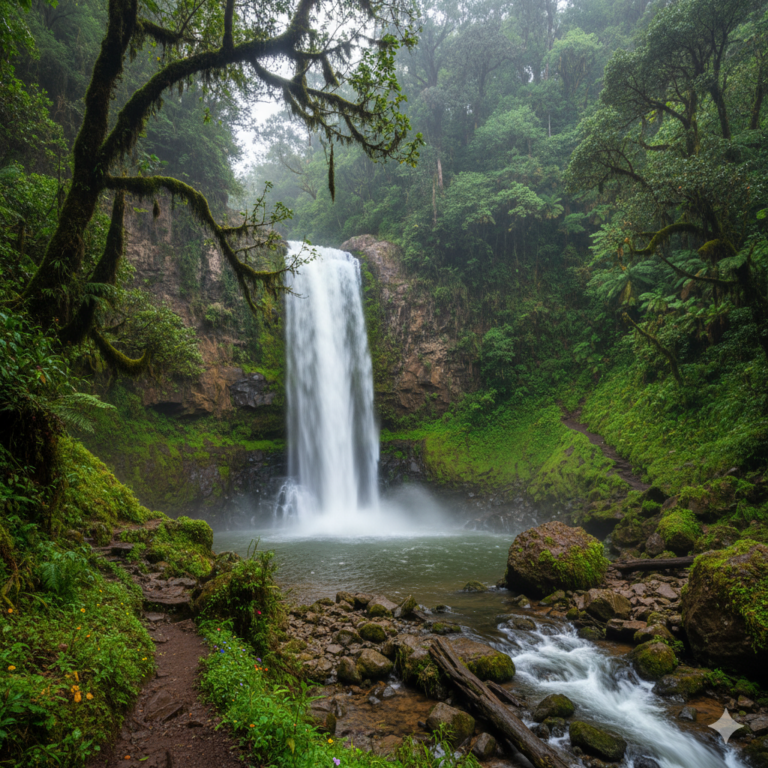
The moorlands are accessible via day hikes from the park’s higher roads, or as part of multi-day treks. An armed ranger is essential—buffalo and elephant occasionally venture this high.
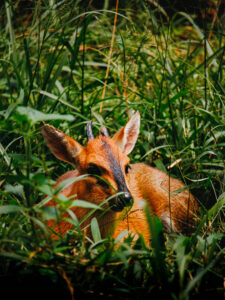
The Bamboo Zone: Bongo Habitat

The bamboo zone is the Aberdares’ mysterious heart. Dense stands of bamboo cover the mountain slopes between 2,400 and 3,000 meters, creating a cathedral-like atmosphere. Light filters through the tall stems. The ground is soft with leaf litter. And somewhere in this green labyrinth, the elusive mountain bongo moves silently.
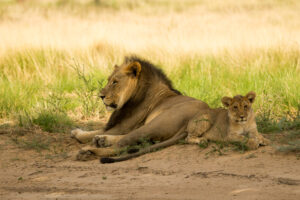
This is the most challenging part of the park for wildlife viewing. The bamboo is thick; visibility is limited. But it’s also the most atmospheric—a place of whispers and shadows, of hidden creatures and ancient rhythms.

Guided walks with armed rangers explore the bamboo zone’s edges. You’re unlikely to see bongo—they are too shy, too rare. But walking here, knowing they are near, is an experience in itself.

Aberdare Month-by-Month: Mountain Weather, Wildlife & When to Visit

Aberdare National Park is a world apart from Kenya’s savannah reserves. This is a landscape of misty moorlands, dense bamboo forests, cascading waterfalls, and deep ravines—a green, wet, mountainous world that shelters unique wildlife including the elusive bongo, black rhino, and the famous tree-climbing lions of the Aberdares.

The Aberdares have their own climate, cooler and wetter than the lowlands. The park receives rainfall year-round, with two distinct wet seasons (March-May and October-December) and two drier periods (January-February and June-September). Temperatures drop significantly at higher elevations—nights can be cold at any time of year.

Use this calendar to match your travel dates with the experiences that matter most—whether that’s wildlife viewing from the famous Treetops lodge, hiking the moorlands, or spotting the rare bongo.

All temperatures are daytime highs and nighttime lows at mid-altitude. Higher elevations are significantly colder.

Month
Rain
Min
Max
Season

Featured Destinations

Selected Complementary Destinations

Amboseli National Park

Top Reasons to Visit
Big 5 Wildlife Year-Round Safari

Mount Kenya National Park

Top Reasons to Visit
Africa's Highest Peak Alpine Climate Bands

Lake Nakuru National Park

Top Reasons to Visit
Rhino Sanctuary Big 5 Wildlife Year-Round Safari Family Friendly

Lewa Wildlife Conservancy

Top Reasons to Visit
Big 5 Wildlife Year-Round Safari Family Friendly

Masai Mara National Reserve

Top Reasons to Visit
Big 5 Wildlife Year-Round Safari

Samburu National Reserve

Top Reasons to Visit
Bird Watchers' Paradise Big 5 Wildlife Family Friendly

Plan Your Journey to Aberdare National Park

Ready to explore? Our travel specialists are here to help craft your dream itinerary.

Chat on WhatsApp
Created by icon tripfrom the Noun Project Created by Amethyst Studiofrom the Noun Project Created by Amethyst Studiofrom the Noun Project Created by Amethyst Studiofrom the Noun Project