Why Stellenbosch Is South Africa's Most Beloved Wine & Heritage Destination
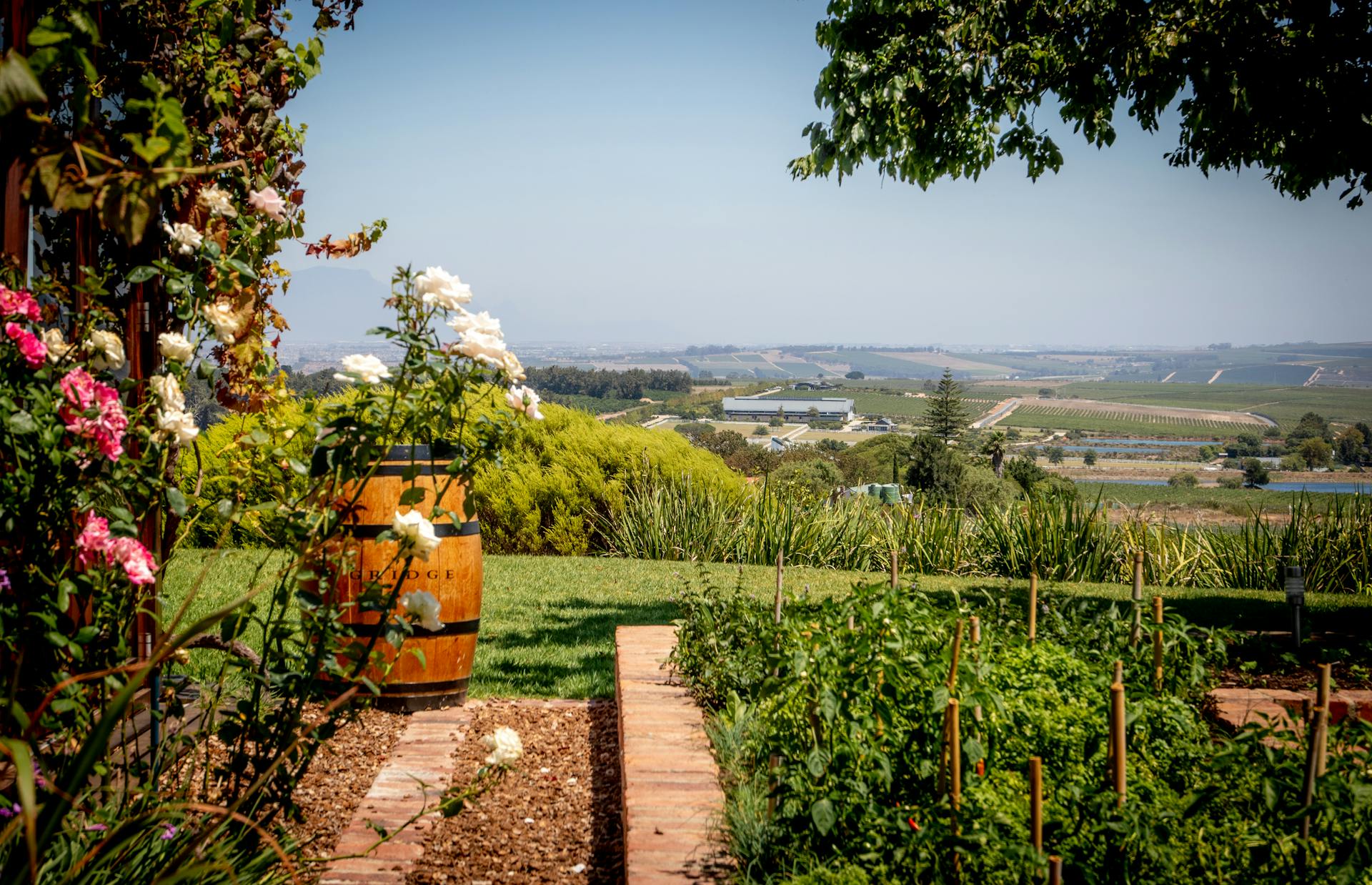
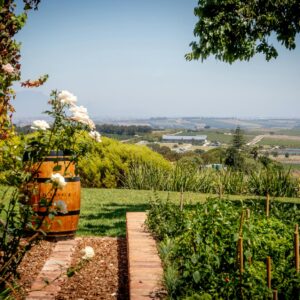
Stellenbosch is not merely a wine region. It is the intellectual and spiritual heart of South African viticulture—a place where 300-year-old gabled farms nestle against mountains, where oak-lined avenues lead to Cape Dutch homesteads, and where the pursuit of wine has been refined over generations into something approaching art.
Founded in 1679 by Simon van der Stel, this university town combines academic energy with agricultural tradition, European elegance with African warmth. It is the oldest wine route in South Africa, the most visited, and for good reason—the quality-to-accessibility ratio is unmatched anywhere on the continent.
Here is why Stellenbosch deserves a place in every South African itinerary.
300 Years of Winemaking Excellence
The first vines were planted in Stellenbosch in 1690, just eleven years after the town’s founding. By the early 18th century, the region was already exporting wine to Europe—a trade interrupted by wars, phylloxera, and politics, but never extinguished.
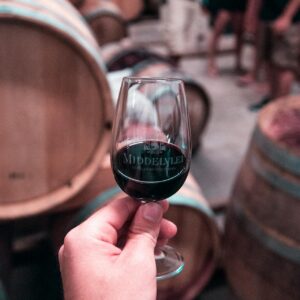
Today, Stellenbosch is home to over 150 cellars, ranging from historic estates like Rustenberg (established 1682) and Kanonkop (1690) to cutting-edge boutique producers experimenting with natural fermentation and minimal intervention. The range is staggering. You can taste Methode Cap Classique sparkling wines that rival Champagne, Bordeaux blends that hold their own against Pauillac, and Chenin Blancs that define the variety globally.
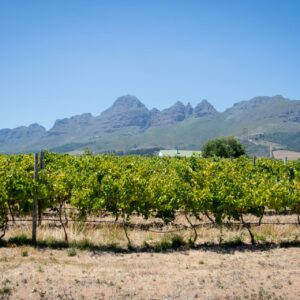
What unites them is a sense of place—terroir expressed through granite soils, cooling maritime breezes, and the distinctive microclimates of the Simonsberg, Helderberg, and Stellenbosch Mountain foothills. This is not merely wine. It is liquid geography.
The Oldest Wine Route in South Africa
In 1971, Stellenbosch established the first wine route in South Africa—a pioneering concept that transformed how visitors experience wine country. Today, the Stellenbosch Wine Route encompasses five distinct sub-regions, each with its own character and signature styles.
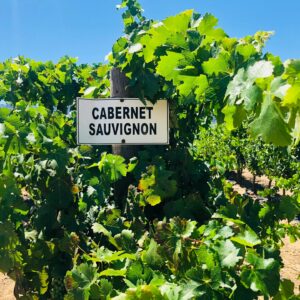
Simonsberg-Stellenbosch: The dramatic northern slopes of Simonsberg produce powerful reds—Cabernet Sauvignon, Shiraz, and Bordeaux blends with structure and aging potential. Kanonkop, Warwick, and Muratie define this region.
Helderberg: Warmer, closer to False Bay, producing rich, concentrated reds and excellent Sauvignon Blanc. Vergelegen, Morgenster, and Lourensford anchor this area.
Stellenbosch Berg: The eastern slopes of Stellenbosch Mountain, home to Rust en Vrede, Delaire Graff, and Tokara—where wine and art converge.
Bottelary Hills: Ken Forrester, Kaapzicht, and a growing community of independent producers focused on Chenin Blanc and terroir-driven reds.
Jonkershoek Valley: The coolest, most dramatic valley, producing elegant reds and Méthode Cap Classique. Hidden away, less visited, essential.
You cannot visit all 150 cellars. You should not try. Choose five estates across different sub-regions. Taste. Compare. Discuss. That is the wine route’s purpose.
Cape Dutch Architecture & Heritage
Stellenbosch’s oak-lined avenues are lined with some of the finest examples of Cape Dutch architecture in South Africa. Whitewashed gables, thatched roofs, sash windows, and ornate front doors—these buildings are not reproductions. They are originals, many dating to the 18th and early 19th centuries.
The Moederkerk (Mother Church), completed in 1863, dominates the town center with its neo-Gothic spire. The Village Museum comprises four houses spanning different eras—each furnished authentically, each illustrating how Stellenbosch’s residents lived from 1700 to 1940. Libertas Parva, now part of the university, was built in 1783 and remains one of the most photographed buildings in town.
But the most spectacular examples are on the wine estates themselves. Vergelegen’s homestead, built in 1700, is a national monument. Rustenberg’s manor house, with its sweeping front stoep, could serve as the setting for a period drama. Delaire Graff’s contemporary architecture, by contrast, proves that Stellenbosch is not frozen in time—it is a living, evolving conversation between past and present.
A University Town with Vibrant Energy
Stellenbosch University is the intellectual engine of the region. Founded in 1918, it is one of South Africa’s oldest and most prestigious universities, home to 30,000 students who animate the town with an energy absent from quieter wine regions like Franschhoek.
This student presence transforms Stellenbosch. Bookshops thrive. Coffee culture is serious. The Neelsie Student Centre, while not a tourist attraction, creates a demographic mix—students, academics, farmers, and oenophiles sharing the same pavements.
Eikestad Mall and the surrounding streets are lined with boutiques, galleries, and restaurants that cater to both students and visitors. The Afrikaans language, born in this region, is spoken on the streets with a cadence unique to Stellenbosch. And the university’s sports fields, particularly on Derby Day, generate a passion that spills into nearby pubs and wine bars.
Stellenbosch is not a wine museum. It is a living town, and its vitality is inseparable from its student population.
World-Class Restaurants
Stellenbosch’s restaurant scene rivals Cape Town’s. The difference is setting—many of the finest restaurants are on wine estates, with vineyard views that transform lunch into an all-day affair.
Delaire Graff Estate: Indochine serves contemporary Asian cuisine against a backdrop of mountains and vines. Chris Erasmus’s cooking is precise, inventive, and deeply connected to local ingredients.
Tokara: The restaurant overlooks the Helshoogte Pass, with views that stretch to False Bay. The menu changes seasonally, but the quality never wavers. Book weeks ahead.
Jordan Restaurant: George Jardine, one of South Africa’s most celebrated chefs, presides over a kitchen that produces food of extraordinary refinement—paired, of course, with Jordan’s exceptional wines.
Overture at Hidden Valley: Bertus Basson’s flagship restaurant, housed in a contemporary glass-and-steel structure overlooking the valley. The tasting menu is a journey through South African ingredients and techniques.
Terroir at Kleine Zalze: Consistently rated among South Africa’s best restaurants, serving modern French cuisine with South African influences.
These are not merely meals. They are experiences that require time, attention, and advance planning. Dress appropriately. Allow three hours. Do not rush.
Chenin Blanc: South Africa's Signature Grape
Chenin Blanc is South Africa’s most planted variety—and Stellenbosch produces some of the finest examples. Known locally as ‘Steen,’ this versatile grape yields wines ranging from bone-dry, mineral-driven expressions to luscious, honeyed dessert wines.
Ken Forrester’s ‘The FMC’ is widely regarded as one of the world’s great Chenins. Mulderbosch’s barrel-fermented Chenin redefined the variety in the 1990s. Raats Family Wines specializes exclusively in Chenin and Cabernet Franc, producing Chenins of extraordinary purity and precision.
But Chenin is not merely a white wine grape. The same variety, when harvested late or affected by noble rot, produces spectacular sweet wines. De Trafford’s straw wine, Klein Constantia’s Vin de Constance (though technically from Constantia), and the late-harvest offerings from Stellenbosch estates demonstrate the grape’s remarkable range.
Do not leave Stellenbosch without tasting at least five Chenins. Compare styles. Compare producers. Compare vintages. This is the grape that defines South African wine—and Stellenbosch is its spiritual home.
Art, Sculpture & Galleries
Stellenbosch’s wine estates have become unlikely art destinations. Delaire Graff Estate houses one of South Africa’s most significant private art collections—works by Dylan Lewis, William Kentridge, and Vladimir Tretchikoff displayed throughout the gardens and lodge. Tokara’s sculpture collection punctuates the landscape. Rupert Museum, though technically in nearby Paarl, is essential for understanding South African art.
But the art scene extends beyond wine estates. The Stellenbosch Gallery showcases contemporary South African artists. SMAC Gallery represents established and emerging names. And the university’s art department ensures a constant flow of new talent and exhibitions.
The Dylan Lewis Sculpture Garden, outside Stellenbosch, is a 20-hectare meditation on the relationship between wildness and civilization. Lewis’s bronze predators emerge from fynbos, half-hidden, watching visitors with ancient eyes. Allow three hours. Walk slowly. The experience is transformative.
Outdoor Activities: Hiking, Cycling & More
Stellenbosch’s setting—nestled against mountains, surrounded by vineyards—invites outdoor exploration. The region’s mild climate and varied terrain offer year-round opportunities for active travelers.
Jonkershoek Nature Reserve: A 30-minute drive from town, this reserve protects the upper reaches of the Jonkershoek Valley. Hiking trails range from gentle riverside walks to the challenging 16-kilometer Panorama Circuit, which rewards with views of the entire valley. Mountain biking trails are world-class—technical, steep, and spectacular.
Simonsberg Trail: A 10-kilometer circular route on the slopes of Simonsberg, accessible from several wine estates. Combine a morning hike with an afternoon tasting at Kanonkop or Warwick.
Stellenbosch Wine Routes by bicycle: Several operators offer guided cycling tours through the vineyards. Flat sections exist, but much of the terrain is rolling. Electric bikes are available and recommended for casual cyclists.
Helderberg Nature Reserve: South of Stellenbosch, offering coastal views and fynbos-covered slopes.
Stellenbosch is not merely a tasting room. It is a landscape to be experienced on foot, by bike, and through the soles of your boots.